Lesson 1: RS-485: Wiring, Termination and Biasing
Why a bus that works on the bench fails on site, and the three resistors that decide it.
Get the numbers out of the meters, drives and engines a site already has, correctly and without gaps. Ten lessons on one site: a meter and a drive on RS-485, a generator on CAN, and a gateway.
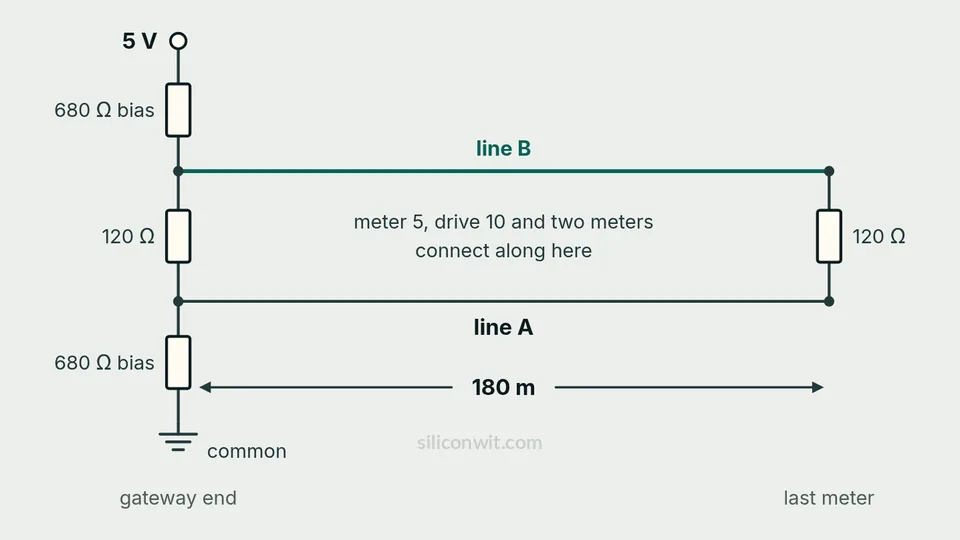
An energy meter answers every request on the bench, and on site, at the end of 180 m of cable, nine requests in ten. A report says a compressor used 16 million kilowatt-hours in seven months: two register words in the wrong order. A generator stops on low oil pressure that had been falling for three weeks, sent on its network twice a second, and nobody was listening.
In this course you wire and check the bus, build and read frames byte by byte, decode the register map and time the poll cycle. Then you carry the readings upward, keep the record honest when the link fails, and find the fault on a silent bus in the fastest order.
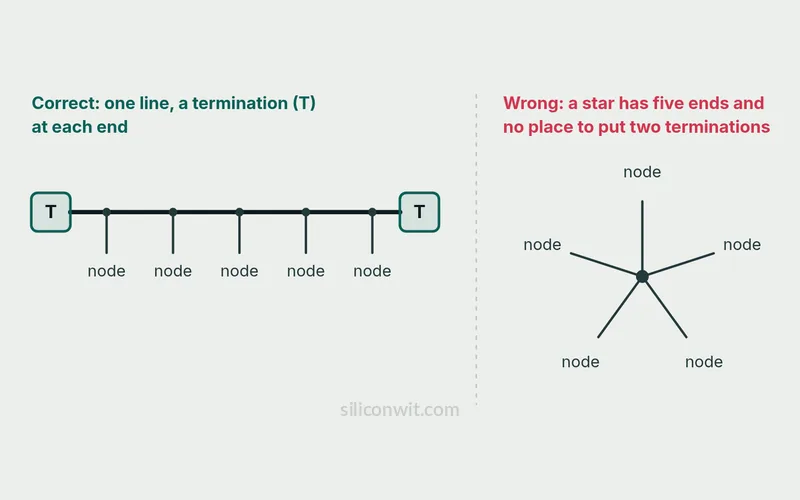 1Wire the busOne line, a termination at each end, and bias at one place.
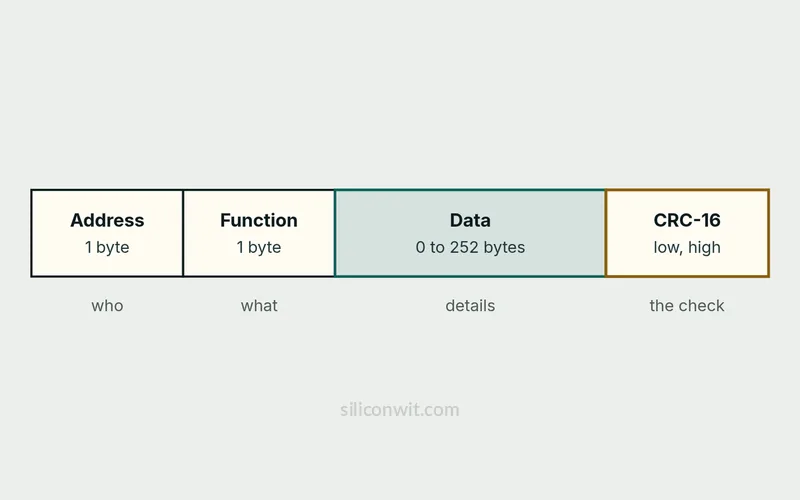 2Read the bytesWho was asked, what was asked, and a check that it arrived intact.
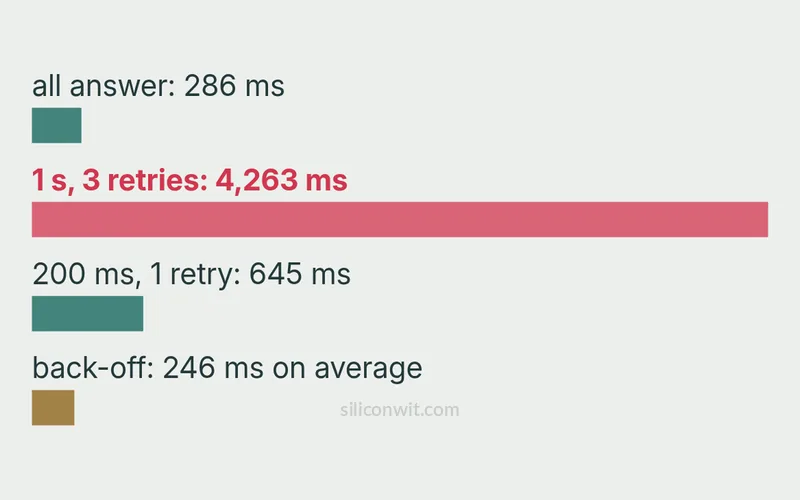 3Time the cycleOne dead meter at 1 s and 3 retries: 4,263 ms a cycle, against 286.
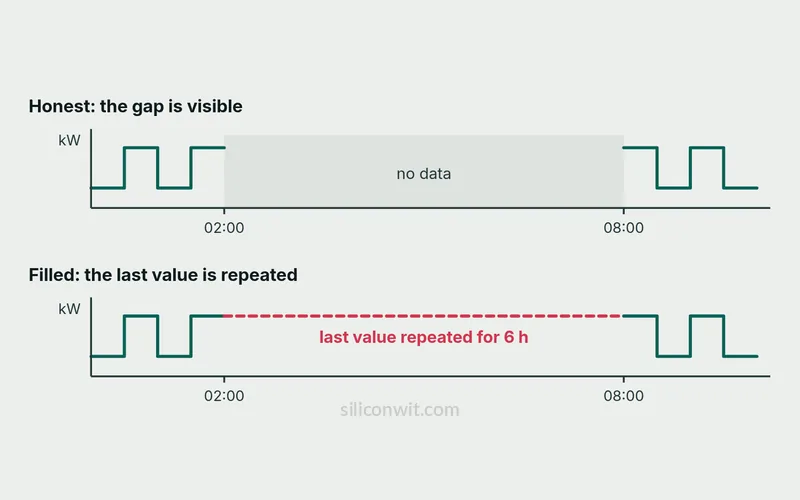 4Keep the record honestA gap shown as a gap, never a last value drawn across it.
New to this? New to field buses? Start with lesson 1: why a bus that works on the bench fails on site.
You need A computer with Python, numpy, scipy and matplotlib. On a real site: a multimeter, and the site's permission.
Most equipment already measures what you need. Learn to get those numbers out of it, correctly and without gaps.
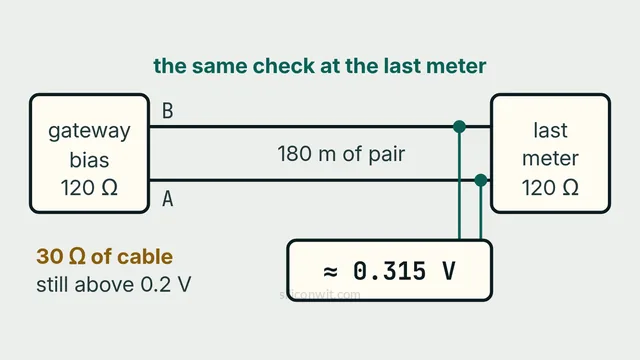 Lesson 1 · 24 minRS-485: Wiring, Termination and BiasingWhy a bus that works on the bench fails on 180 m of cable, and the three resistors that decide it.Differential pairTerminationBiasUnit loads
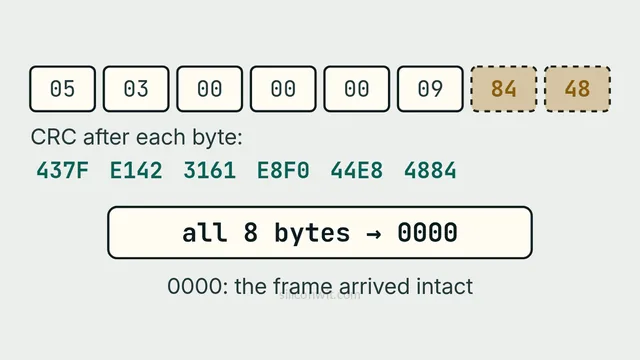 Lesson 2 · 26 minModbus RTU: Frames, Function Codes and the CRCA request to an energy meter byte by byte, its CRC, the reply, and the short frame of a refusal.FramesFunction codesCRC-16Exceptions
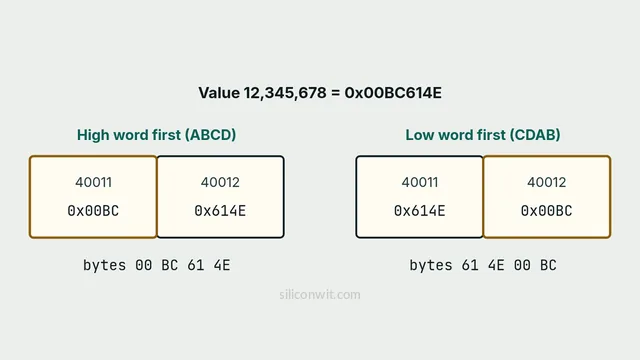 Lesson 3 · 25 minRegister Maps, Data Types and ScalingRaw words into volts, amps and kilowatt-hours, in the right word order, tested before anyone trusts them.Register mapSigned and unsignedFloat32Word order
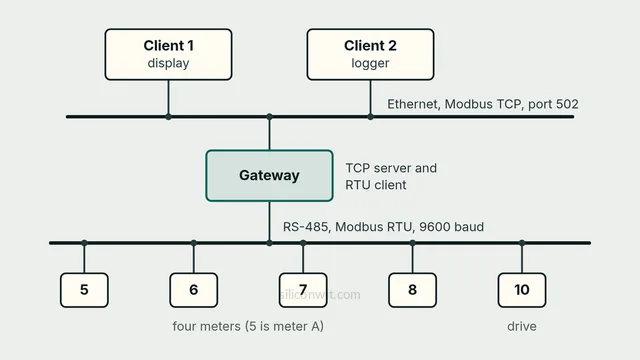 Lesson 4 · 25 minModbus TCP and GatewaysThe same request over Ethernet, what a gateway does with it, and why a second client makes healthy meters time out.MBAP headerPort 502Unit identifierGateway queue
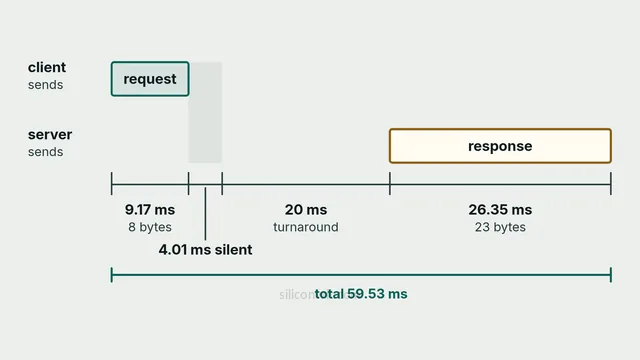 Lesson 5 · 26 minPolling Design: Timing, Timeouts and RetriesHow long a poll cycle takes, and how to stop one dead meter from slowing all the others.Transaction timeTimeoutsRetriesBack-off
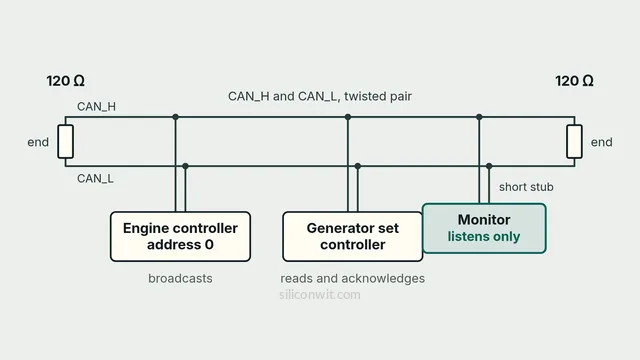 Lesson 6 · 24 minCAN and J1939 on Engines and GeneratorsEngine speed, temperature and oil pressure from a generator, read without disturbing it.CANJ1939PGNListen-only
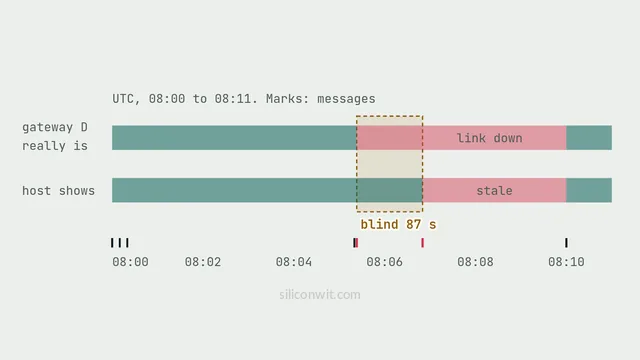 Lesson 7 · 26 minMQTT and Sparkplug BPublish through a broker, and the rules that tell a host when a value is still alive.BrokerQoSBirth and deathSequence
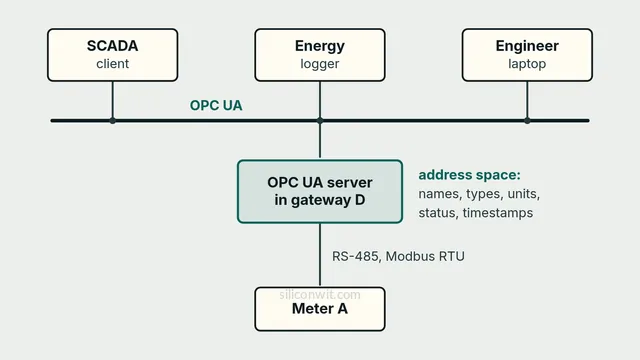 Lesson 8 · 26 minOPC UA: Data With MeaningA server that sends the meaning with the value, and when that is worth its weight.Address spaceStatus codesSubscriptionsCertificates
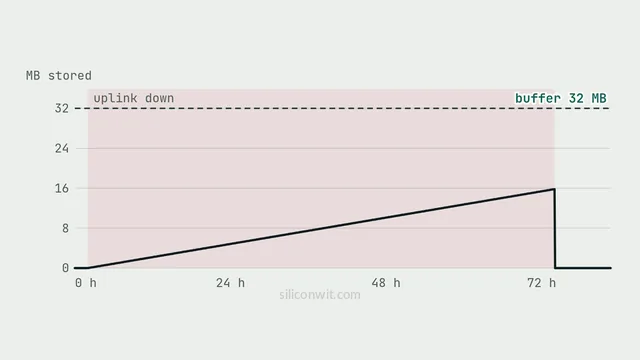 Lesson 9 · 24 minTimestamps, Buffering and GapsThe time of each reading, a buffer for the outage, and gaps shown as gaps.UTCStore and forwardQuality flagsCounters
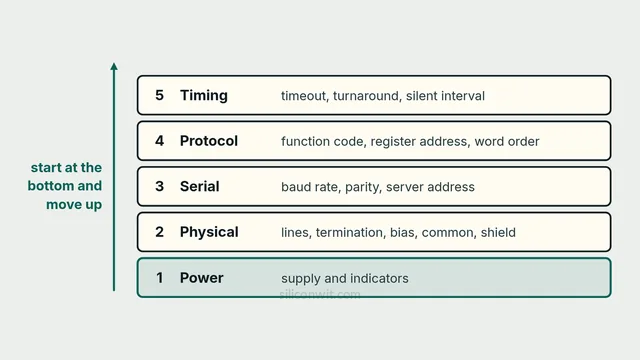 Lesson 10 · 25 minDiagnosing a Silent BusFind the fault on a silent bus from the bottom up, with a multimeter and a capture of the bytes.Resistance checkIdle voltageError patternsCommissioning record
A bus does not work because the software is right. Each number comes from the cable, the protocol or the time the record must survive.
The test: is the map written down and kept?
The test: must many systems find the data by themselves?
Honest limits. Writing to a drive or a breaker over a network can start a machine, so commands are made only under the site's permit, and no safety function may depend on a network. Time stamps and the buffer stay in the gateway on site; the long record, the gap report and the comparison between sites are kept beyond it.
The meter is fitted, the drive is running, and the screen shows nothing. Most installed industrial equipment already measures what a site needs to know, and the numbers stay inside it because nobody could get them out. This course is about getting them out correctly: the wiring, the frames, the register maps and the timing. #Modbus #RS485 #IndustrialCommunication
It follows one site: an energy meter and a variable speed drive on an RS-485 bus, a generator controller on CAN, and a gateway that carries their readings upward. Each lesson builds real frames byte by byte and checks them with code.
A computer with Python, and three libraries.
pip install numpy scipy matplotlibLesson 1: RS-485: Wiring, Termination and Biasing
Why a bus that works on the bench fails on site, and the three resistors that decide it.
Lesson 2: Modbus RTU: Frames, Function Codes and the CRC
Build and read a frame byte by byte, and compute its check.
Lesson 3: Register Maps, Data Types and Scaling
Turn raw register words into volts, amps and kilowatt-hours, in the right byte order.
Lesson 4: Modbus TCP and Gateways
The same request over a network, and what a gateway does to it.
Lesson 5: Polling Design: Timing, Timeouts and Retries
How long a poll cycle takes, and what one dead meter does to it.
Lesson 6: CAN and J1939 on Engines and Generators
Read engine speed, temperature and pressure from a generator without disturbing it.
Lesson 7: MQTT and Sparkplug B
Publish and subscribe, and the rules that make the data mean something.
Lesson 8: OPC UA: Data With Meaning
What a self-describing server gives you, and when it is worth its weight.
Lesson 9: Timestamps, Buffering and Gaps
Keep a record honest when the link fails.
Lesson 10: Diagnosing a Silent Bus
A method that finds the fault in the order that is fastest.
Writing to a drive or a breaker over a network can start a machine. Commands to plant are made only under the site’s permit and lock-out rules, and no safety function may depend on a network. Wiring inside a mains panel is for a licensed electrician.
Engineers and researchers who build what they teach.
SiliconWit makes these courses. We also run siliconwit.io, a monitoring service.