Know which claims deserve belief, and test your own work the way it could fail. Nine lessons on science as engineers use it, from a supplier's promise to a test sheet with your name on it.
A supplier sells a controller that "optimises the efficiency" of a cold room, and no reading can ever show the claim false. A new cold room passes a check made on a cool morning with the room empty, then stays at 9 °C on its first hot afternoon. A pump chosen from the maker's curve fills the tank in 15 minutes, not 12. A commissioning sheet says that an alarm was tested, and it was not.
In this course you learn what makes a claim worth believing and a test worth running: say what result would prove it wrong, test the one thing that separates the causes, find what a model leaves out, give every reading its range, and decide how much care a choice deserves. Each lesson works one real case step by step: a pump, a cold room, a solar plant or a line of motors.
How a claim is tested
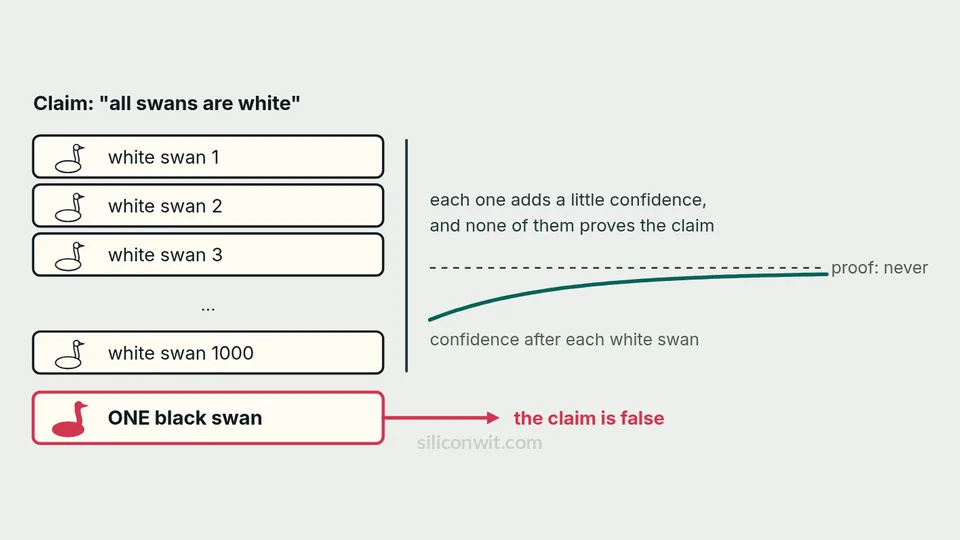
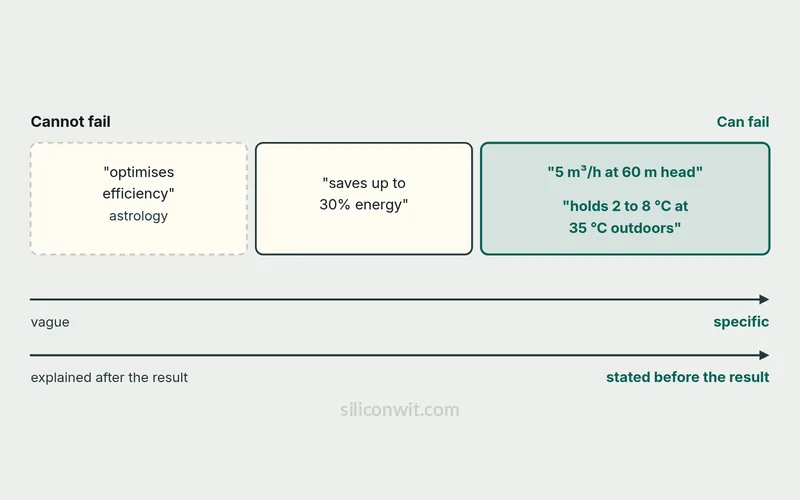
1Say what would prove it wrongFrom "optimises efficiency" to "5 m³/h at 60 m head": the more specific the claim, the more a reading can judge it.
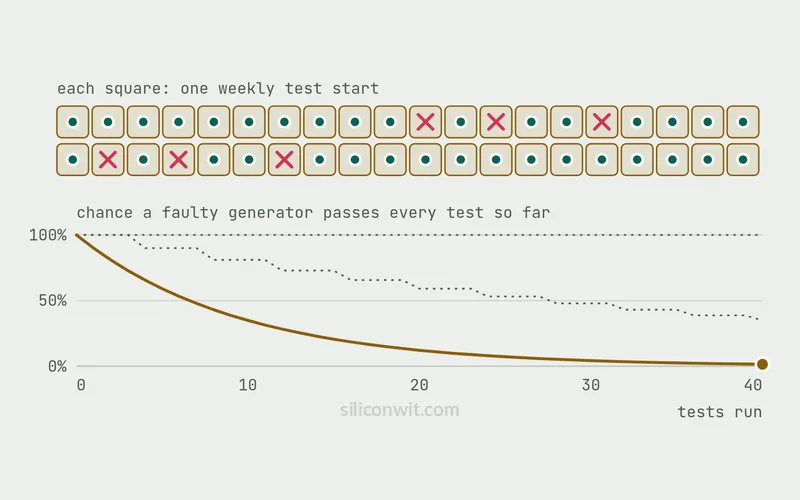
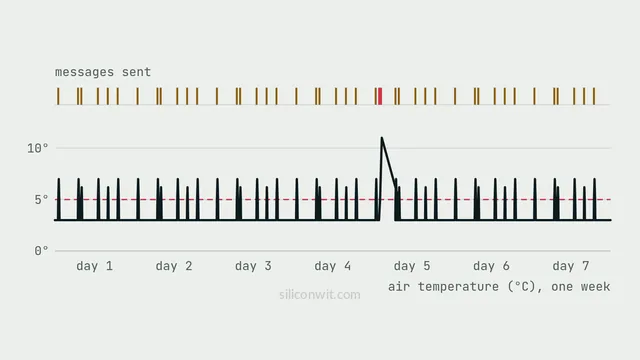
2Run the test that could failMild mornings with no load let a faulty generator pass every start. Cold starts at full load give the fault its chance.
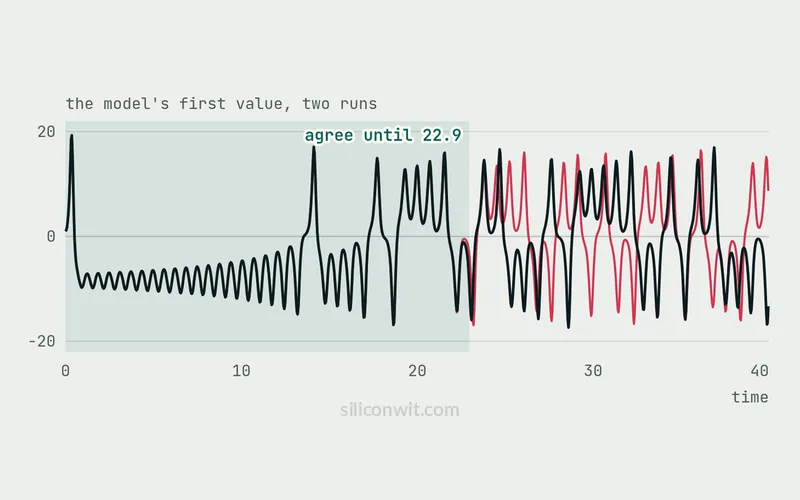
3Know where knowledge endsTwo runs of a small weather model start almost equal, agree for a while, then go different ways.
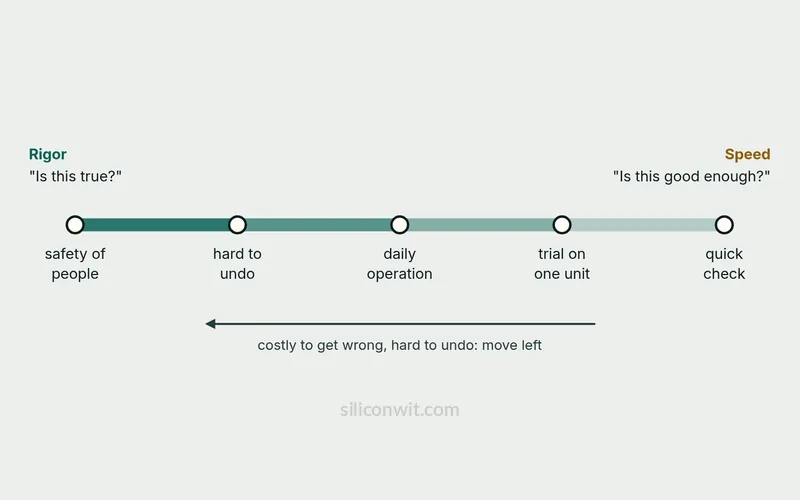
4Choose how much careFrom the safety of people to a quick check. Costly to get wrong and hard to undo: move toward rigor.
You will be able to
Turn a vague claim into one a measurement can judge, and write the failing result before the test
Find what a model or a reading leaves out, and give a result its range
Decide how much care a choice deserves, and sign only for what was measured
New to this? Start with lesson 1: a controller that "optimises the efficiency" of a cold room, and the one question that tests it.
You need Time to read, and paper for the exercises at the end of each lesson.
The engineering behind it
What it takes for a claim to deserve belief, and what an engineer owes the people who rely on the work.
In each case a number settled the question that opinion could not.
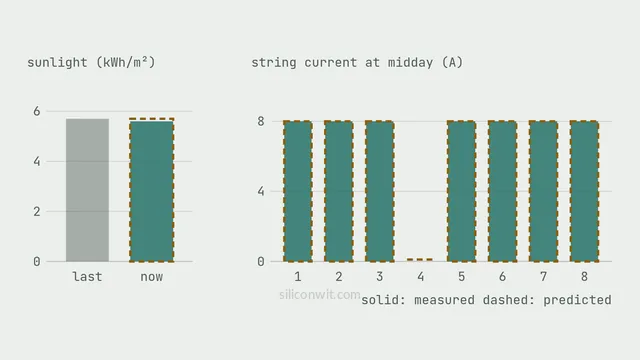
12.5 percentless output for each unit of sunlight at the solar plant: one string of eight stopped, while the sunlight fell only 1.8 percentMethod
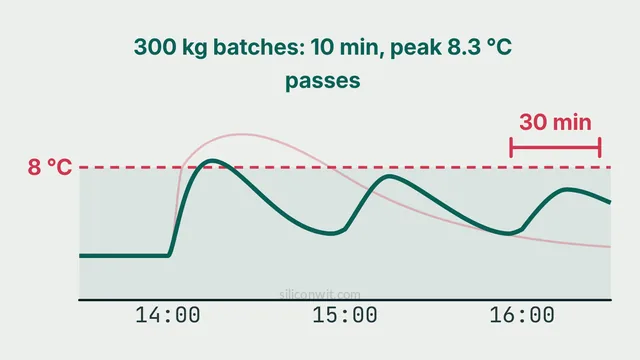
50 minabove 8 °C after 800 kg of warm produce, against a limit of 30; in batches of 300 kg it was 10 minTesting
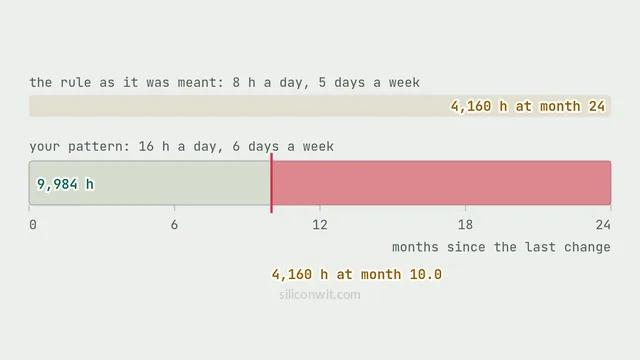
9,984 hthat bearings now run between changes on two shifts, 2.4 times the 4,160 hours the 24 month rule meantParadigms
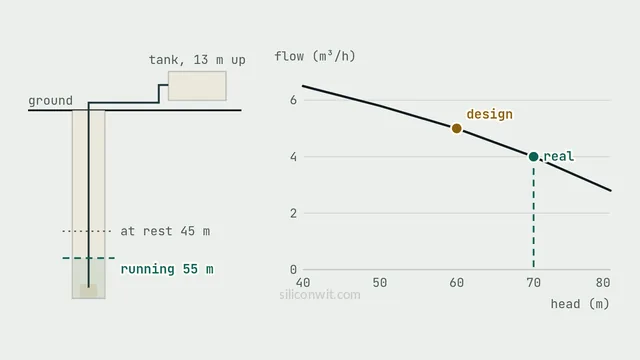
70 mthe real head when the water falls to 55 m while the pump runs; the curve then gives the 4.0 m³/h that was measuredModels
336messages without a fault before one real fault, 42 a week for eight weeks, and the guard stops reading themConsequences
A claim that can fail is a claim you can use
Cannot fail
"Optimises the efficiency"
Names no quantity, so every bill fits it
Explained after the result
Tells you nothing before you buy and nothing after
The test: what reading would show it is wrong? None.
Can fail
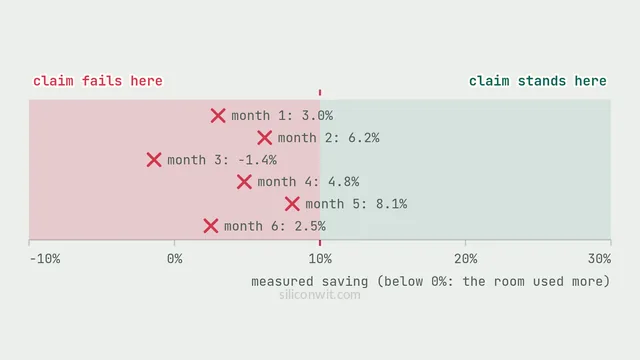
"At least 10 percent less"
A quantity, an amount and the conditions
The failing result written before the test
168 against 163 kWh for each degree: 3 percent, so the claim failed
The test: any result above 151.2 kWh for each degree fails it.
What you work with
Real casesCold rooms, pumps, a solar plant and the sheets engineers sign.
One case a lessonEach idea used on one fault or decision, step by step.
Ideas in plain wordsPopper, Kuhn, Box and Feynman, applied to engineering work.
Failures that teachChallenger, Therac-25, the 737 MAX and the Mars Climate Orbiter.
Questions to keepWhat result would show it is wrong? And then what?
No special equipmentA written claim, the evidence against it, and an honest statement of what is not known.
Honest limits. The lessons judge claims, tests and decisions; they do not replace a professional code or the law where you work. Where a case needs readings on the mains, as with the pump that trips at night, a licensed electrician takes them.
Before you start
No other course needed
Some practice with measurements and simple percentages
Critical Thinking for Engineers is a good companion
Science is not a collection of facts. It is a method for not fooling yourself. This course connects philosophy of science directly to engineering practice. Every lesson uses real case studies, from the Challenger disaster to the transistor revolution, to show how thinkers like Popper, Kuhn, and Feynman illuminate the work engineers do every day. Whether you are debugging firmware, reviewing a vendor datasheet, or choosing between competing technologies, you are doing philosophy of science, whether you realize it or not. #PhilosophyOfScience #Engineering #CriticalThinking
Why Philosophy for Engineers?
Better Testing
Popper showed that the goal of testing is to find failures, not confirm success. This insight transforms how you write test plans, review designs, and evaluate evidence. If you have ever shipped a product that passed all tests and still failed in the field, you need Popper.
Recognize Paradigm Shifts
Kuhn explained why established communities resist new ideas, even when the evidence is overwhelming. Understanding this helps you navigate technology transitions (analog to digital, C to Rust, monolithic to microservices) without being caught on the wrong side.
Use Models Wisely
Every simulation, every schematic, every equation is a model. George Box reminded us that all models are wrong, but some are useful. Knowing the difference between the map and the territory is the difference between a good engineer and a dangerous one.
Intellectual Self-Defense
Pseudoscience, cargo cult engineering, and vendor hype are everywhere. Feynman’s “Cargo Cult Science” essay is the best guide ever written for not fooling yourself. This course gives you the tools to spot nonsense.
Lessons
Lesson 1: What Makes Something Scientific?
What Makes Something Scientific?. The demarcation problem: how do you tell science from non-science? Popper’s falsifiability criterion, pseudoscience red flags, and the cold fusion debacle. Learn to evaluate engineering claims, datasheets, and research papers.
Lesson 2: The Scientific Method in Engineering Practice
The Scientific Method in Engineering Practice. The textbook version vs the messy reality. Debugging is hypothesis testing, design reviews are peer review, test plans are experiments. Case study: Edison’s systematic filament testing.
Lesson 3: Falsifiability: Testing to Fail
Falsifiability: Testing to Fail. Popper’s key insight applied to engineering: the goal of testing is to find how your design fails, not to confirm it works. Confirmation bias, negative testing, and the Challenger disaster.
Lesson 4: Paradigm Shifts: How Engineering Knowledge Evolves
Paradigm Shifts. Kuhn’s model of scientific revolutions applied to engineering: vacuum tubes to transistors, CISC to RISC, bare metal to RTOS. The Rust vs C debate through Kuhn’s lens.
Lesson 5: Models, Maps, and Reality
Models, Maps, and Reality. “All models are wrong, but some are useful.” When SPICE simulations succeed, when financial models catastrophically fail, and how to use engineering models wisely by knowing their assumptions and boundaries.
Lesson 6: Uncertainty and the Limits of Knowledge
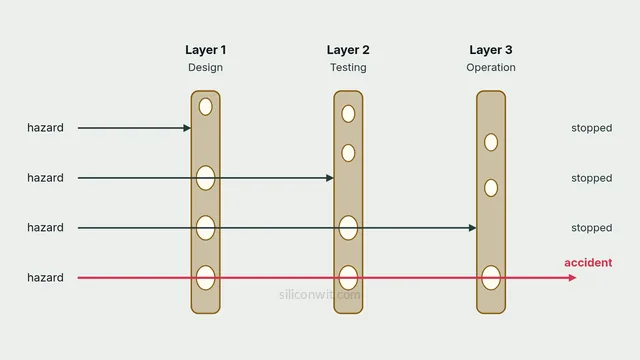
Uncertainty and the Limits of Knowledge. What we can know, what we cannot. Measurement uncertainty, chaos theory, complexity, observer effects, and why “more data” does not always help. The Mars Climate Orbiter and defense in depth.
Lesson 7: Ethics and Responsibility in Engineering
Ethics and Responsibility in Engineering. Therac-25, Boeing 737 MAX, Volkswagen emissions. When engineering decisions have life-or-death consequences. Professional codes, whistleblowing, and a practical ethics checklist.
Lesson 8: Technology, Society, and Unintended Consequences
Technology, Society, and Unintended Consequences. Every technology has second-order effects. The automobile, social media, IoT surveillance, AI recommendation engines. The Collingridge dilemma and responsible innovation.
Lesson 9: Thinking Like a Scientist-Engineer
Thinking Like a Scientist-Engineer. Synthesis: combining scientific rigor with engineering pragmatism. When to be rigorous, when to ship. Feynman’s cargo cult science, engineering notebooks, and building a personal scientific practice.
Recommended Reading
These four works form the intellectual backbone of this course. None requires a philosophy background.
Book
Author
Why It Matters
The Logic of Scientific Discovery
Karl Popper
The foundation: science advances by trying to prove itself wrong, not by accumulating confirmations. Directly applicable to engineering test philosophy.
The Structure of Scientific Revolutions
Thomas Kuhn
Explains why established paradigms resist change and how revolutionary shifts happen. Essential for understanding technology transitions.
Cargo Cult Science (essay, 1974)
Richard Feynman
The most readable warning ever written about fooling yourself with the appearance of rigor. Available free online.
To Engineer Is Human
Henry Petroski
How engineering failures drive progress. Bridges the gap between philosophy of science and the messy reality of building things.
Who This Course Is For
No prerequisites
This course is for any engineer, researcher, or technical professional who wants to think more clearly about what they build and why. You do not need a philosophy background. You do not need advanced mathematics. You need curiosity and a willingness to question assumptions, including your own.
Especially useful if you:
Write test plans and wonder if you are testing the right things
Read vendor datasheets and wonder how much to trust them
Work in a field undergoing rapid technology change
Have ever said “the simulation passed” and then watched the hardware fail
Want to build things that actually work, not things that merely appear to work
Getting Started
Start with Lesson 1. Each lesson builds on the previous one, but they are also self-contained enough to read independently.
Read the recommended books. You do not need to read them before starting the course, but they will deepen your understanding significantly. Feynman’s essay is short and free.
Apply immediately. The value of this course comes from applying the ideas to your own work. After each lesson, look at your current project through the lens of what you just learned.
Discuss. Philosophy is a conversation, not a lecture. Use the comments on each lesson to share your experiences and challenge the ideas presented.
Made by
Engineers and researchers who build what they teach.