Lesson 1: The Solar Resource
Irradiance, peak sun hours, tilt and season: what the sun delivers to a panel.
Know what a solar and battery system should give, and prove what it really gives. Ten lessons on one site, from the light on the roof to a yearly audit.
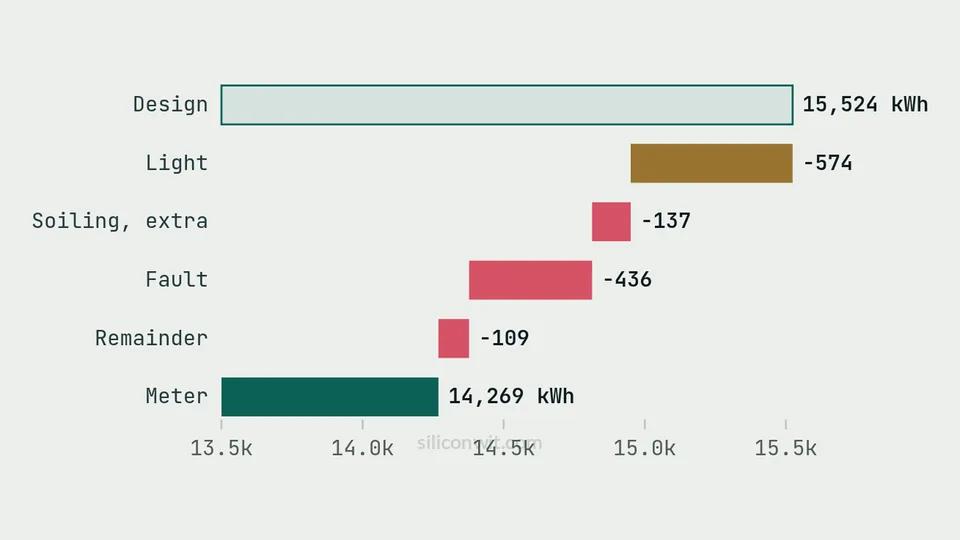
An installer quotes ten kilowatts, and at noon the meter shows six. A workshop promised "enough solar for the whole load" runs its generator every afternoon of the rainy season. A connector fails on a Tuesday, one of two strings stops, and nobody notices for three weeks, because half an array still looks like a working array. At the end of the year the owner was promised 15,500 kWh and the meter shows 14,269.
In this course you follow one site with a roof array, a battery, an inverter and a standby generator. You count the light, size the system from the load, take the weather out of the record, and split a shortfall into causes that add up, each with its evidence.
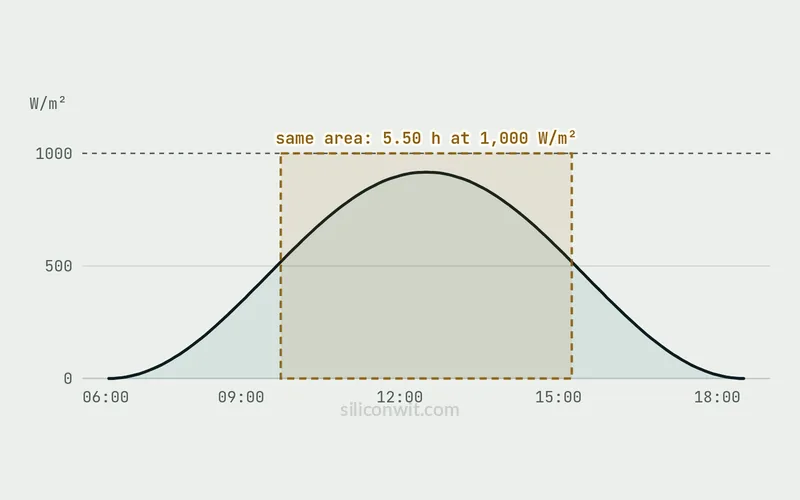 1Count the lightA clear day gives 5.50 peak sun hours: the energy of 5.5 hours at full sun.
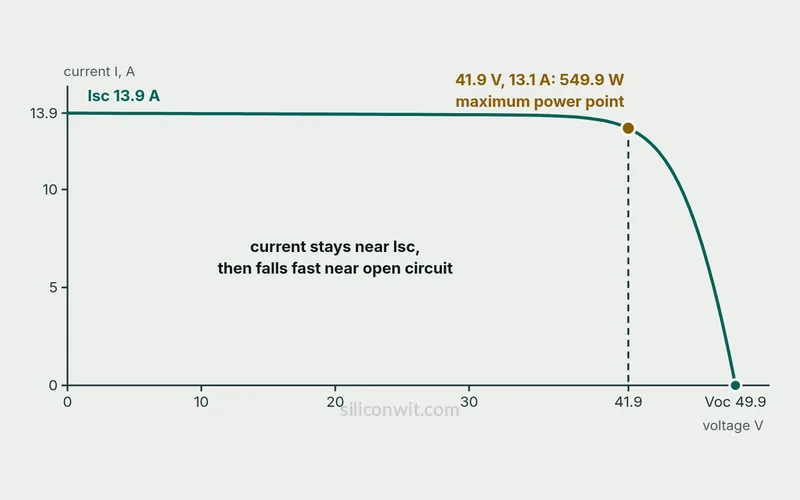 2Read the curveThe load decides where a module works. The best point is at the knee.
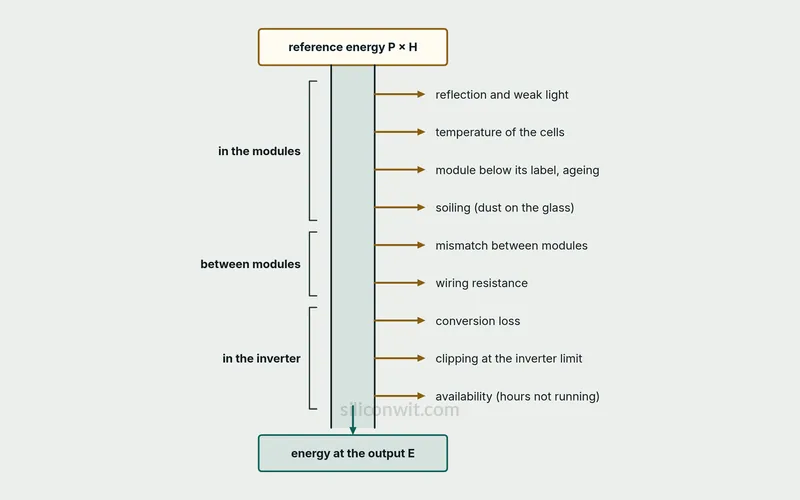 3Count the lossesEach loss is a factor between the light and the meter, and the factors multiply.
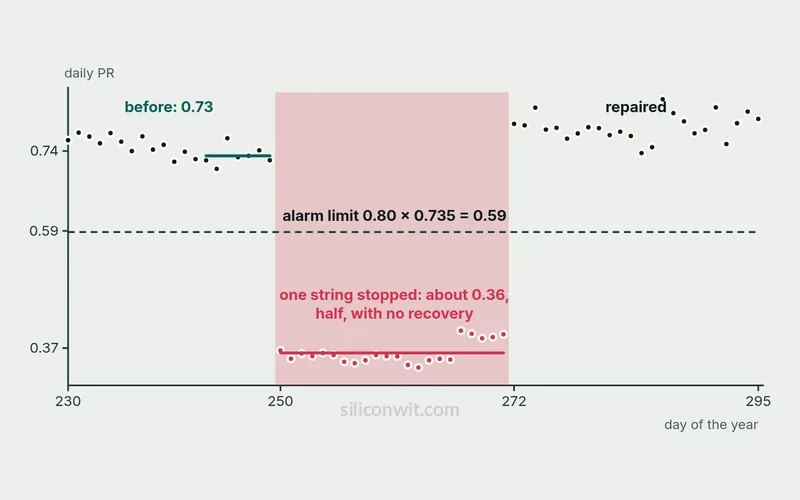 4Read the recordA failed string is a step in the daily ratio. The alarm fires on the first day.
New to this? New to solar? Start with lesson 1: what the sun really delivers to a roof.
You need A computer with Python, numpy, scipy and matplotlib. The data of the site are in the lessons.
Solar is sold on nameplate power and judged on energy. Learn what a system should really produce, and why it falls short.
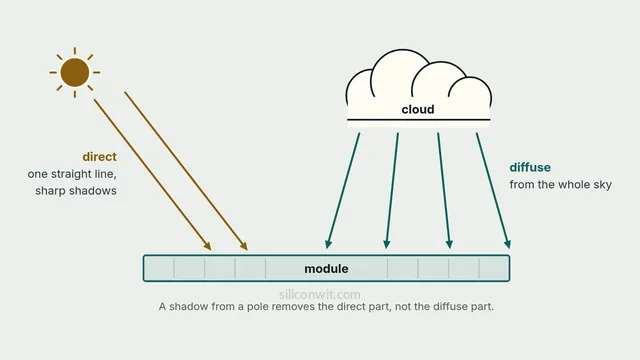 Lesson 1 · 27 minThe Solar ResourceCount the light on a roof, and see why an array sized on the yearly mean is short in the cloudy season.IrradiancePeak sun hoursTiltWorst month
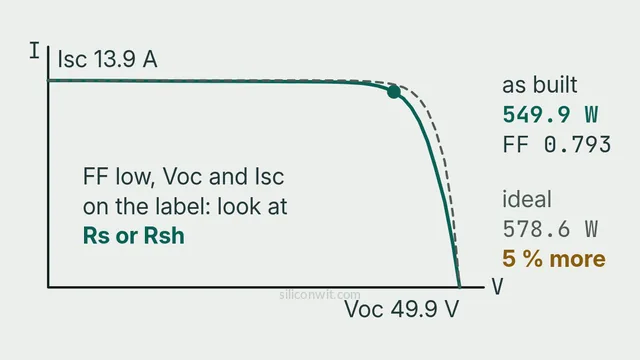 Lesson 2 · 26 minThe Solar Cell and Its I-V CurveOne curve of current against voltage, and why an array of 9.9 kWp gives about 6.47 kW at the meter at noon.I-V curveMaximum power pointFill factorCell temperature
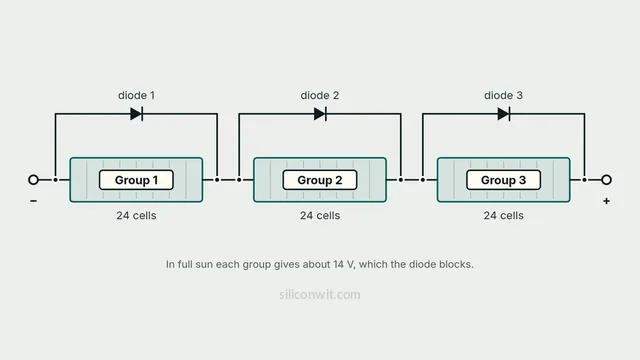 Lesson 3 · 26 minModules, Strings and ShadingCheck a string against the inverter at the coldest and the hottest cell, and find what one shaded group costs.Series and parallelString voltageBypass diodesShading
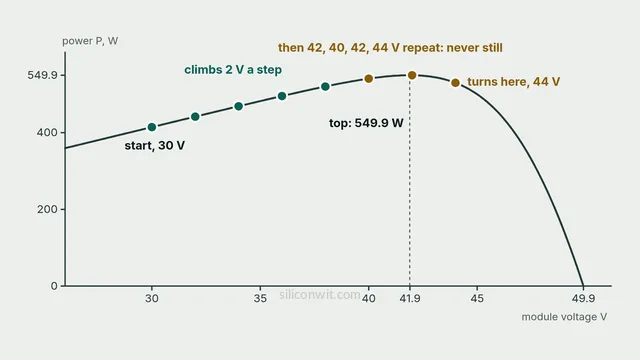 Lesson 4 · 27 minMaximum Power Point Tracking, Controllers and InvertersHow a tracker finds the best point, where it is misled, and what an inverter smaller than its array clips.PWM and MPPTPerturb and observeInverter efficiencyClipping
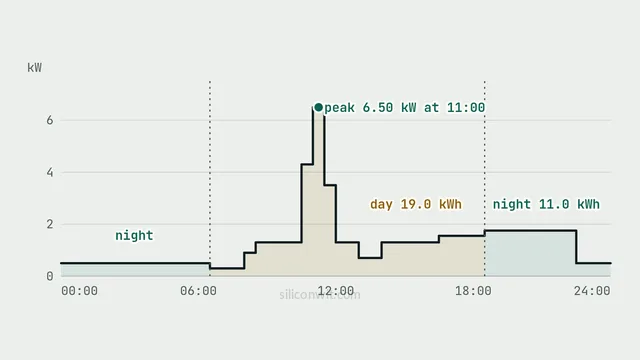 Lesson 5 · 24 minSizing a System from the LoadStart from what must run and when, and work back to the array, the battery and the inverter.Load tableDay and nightBattery sizeStarting surge
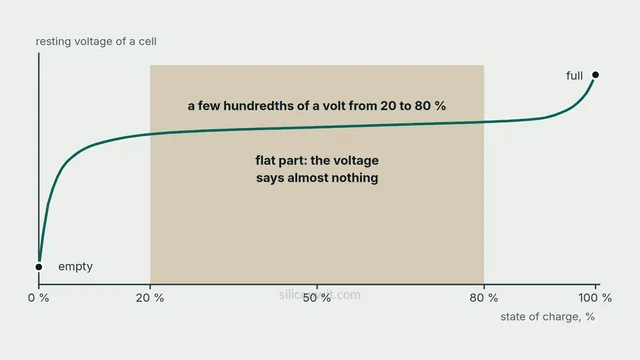 Lesson 6 · 26 minBatteries: State of Charge and Cycle LifeFollow the charge of a battery through a day, and find what each stored kWh costs in wear.Ah and kWhState of chargeDepth of dischargeCycle life
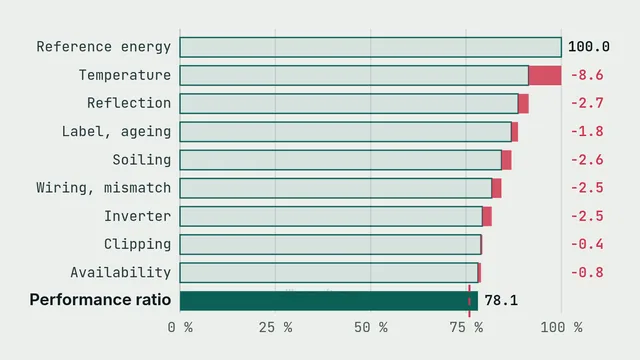 Lesson 7 · 24 minPerformance Ratio and LossesTake the weather out of the reading, and build the loss table that says what the ratio should be.Performance ratioLoss chainSpecific yieldTemperature loss
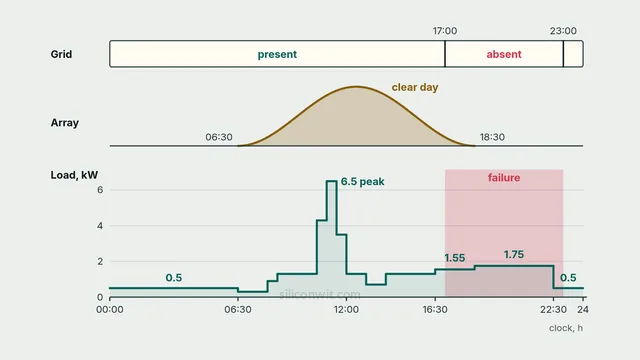 Lesson 8 · 26 minHybrid Systems: Solar with a Generator or the GridWhat a kWh costs from each source, what happens when the grid fails, and the fuel a battery saves.Hybrid inverterGenerator fuelGrid failureCost per kWh
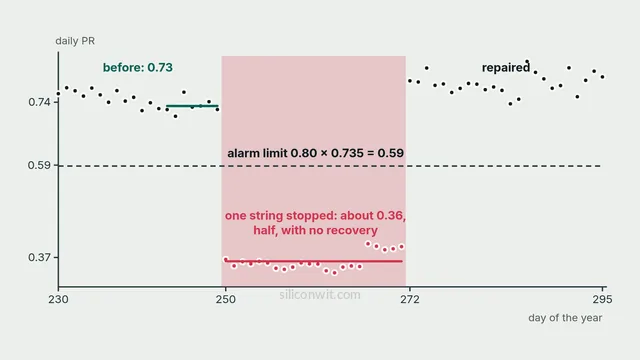 Lesson 9 · 26 minMonitoring, Faults, Soiling and DegradationTell dust from a failed string from ageing in the daily record, and write an alarm that fires on the first day.Daily ratioSoiling rateWhen to washAlarm rules
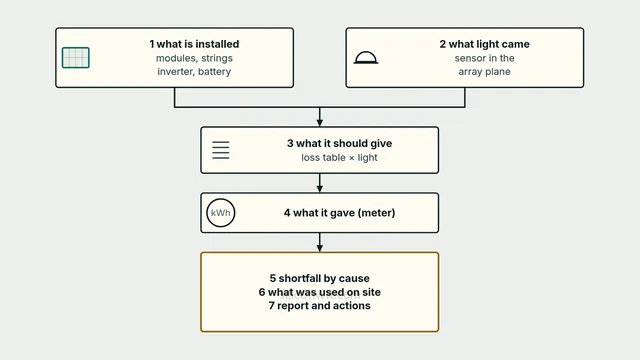 Lesson 10 · 25 minAuditing a Solar SystemSplit a shortfall of 1,255 kWh into causes that add up, and write a one-page report an owner can act on.Yield auditShortfall splitUncertaintyRanked actions
A system is not 10 kW because the seller had one in stock. Each number comes from the light, the heat, the inverter or the load.
The test: what did the meter turn?
The test: did the sun change, or the system?
Honest limits. Arrays, batteries and inverters carry lethal direct voltages, and work on them is for qualified installers. The lessons explain how a system behaves and how to read its measurements. The BMS protects the cells on site, and the inverter settings keep the battery inside its limits.
A solar installer quotes ten kilowatts, the owner expects ten kilowatts, and at noon the meter shows six. Nobody lied: nameplate power is measured in conditions a roof in the tropics never meets. Most disappointment with solar comes from not knowing what to expect, and from having no record that shows what the system really does. #SolarPV #Batteries #EnergyYield
It follows one site with a roof array, a battery bank, an inverter and a standby generator. Each lesson works real numbers by hand and checks them in Python.
A computer with Python, and three libraries.
pip install numpy scipy matplotlibLesson 1: The Solar Resource
Irradiance, peak sun hours, tilt and season: what the sun delivers to a panel.
Lesson 2: The Solar Cell and Its I-V Curve
One curve explains what a panel gives in every condition.
Lesson 3: Modules, Strings and Shading
Why one shaded cell can take down a string, and what bypass diodes do.
Lesson 4: Maximum Power Point Tracking, Controllers and Inverters
Keep the array at its best point, and convert what it gives.
Lesson 5: Sizing a System from the Load
Start from what must run, and work back to panels and batteries.
Lesson 6: Batteries: State of Charge and Cycle Life
What a battery really stores, and what shortens its life.
Lesson 7: Performance Ratio and Losses
Where the energy goes between the sun and the load.
Lesson 8: Hybrid Systems: Solar with a Generator or the Grid
Make the sources work together, and count the fuel saved.
Lesson 9: Monitoring, Faults, Soiling and Degradation
Tell a dirty array from a failed string from an ageing one.
Lesson 10: Auditing a Solar System
Compare what the system should produce with what it does.
Work on arrays, batteries and inverters involves lethal direct voltages and is for qualified installers. The lessons explain how a system behaves and how to read its measurements.
Engineers and researchers who build what they teach.
SiliconWit makes these courses. We also run siliconwit.io, a monitoring service.