Lesson 1: Simple Payback and Its Limits
The quickest test of a project, and the three ways it misleads.
Decide what an energy project is worth before you spend, and prove what it saved after, so that nobody can argue with the number. Ten lessons on four real projects.
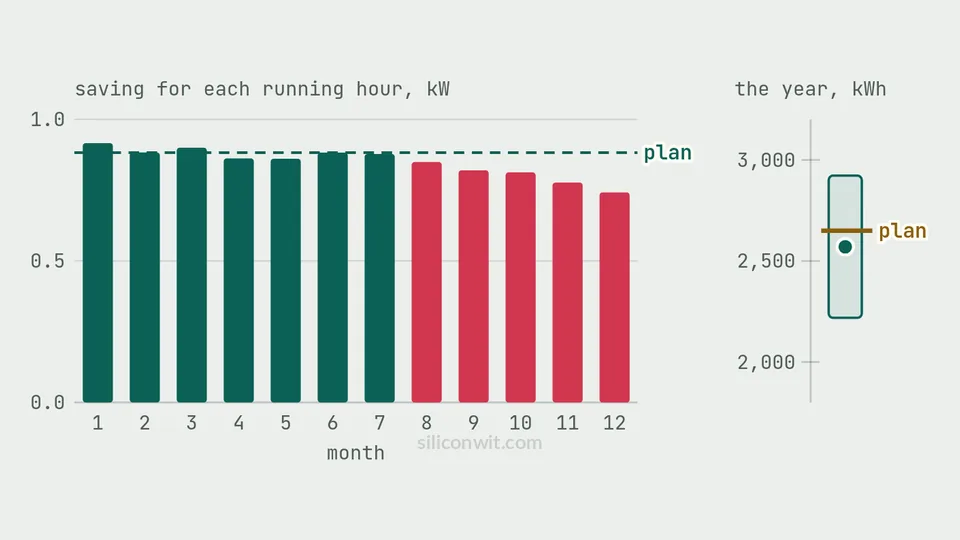
A supplier promises that a new drive will cut the pumping bill by thirty percent. A year later the bill is higher, the supplier says the weather was hot, and nobody can prove anything. On another site the contractor brings one power reading that shows a saving of 38 percent, and the owner brings twelve bills that show nothing. Both are honest, and there is no way to choose.
In this course you judge a project by its whole life, draw the line round what a claim covers, take the weather out with a baseline, and put a range on the saving. Then you write the plan before the work starts, and a one-page report that a finance manager and an auditor can both accept.
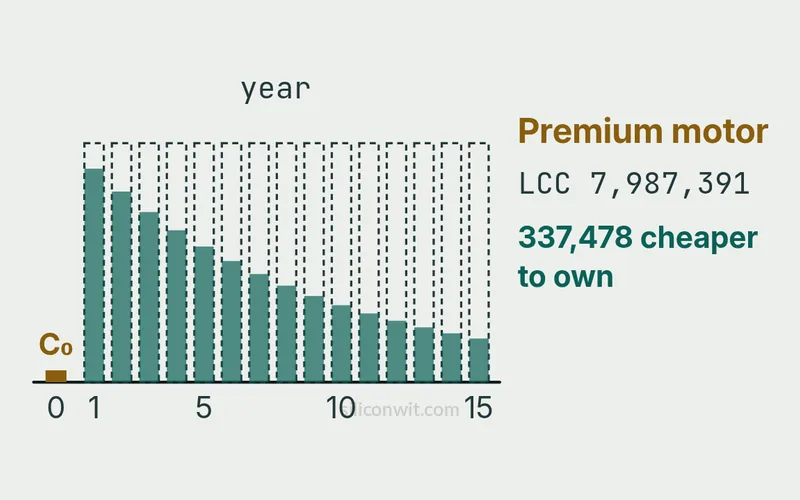 1Judge the whole lifeThe purchase is under one percent of what a motor costs to own.
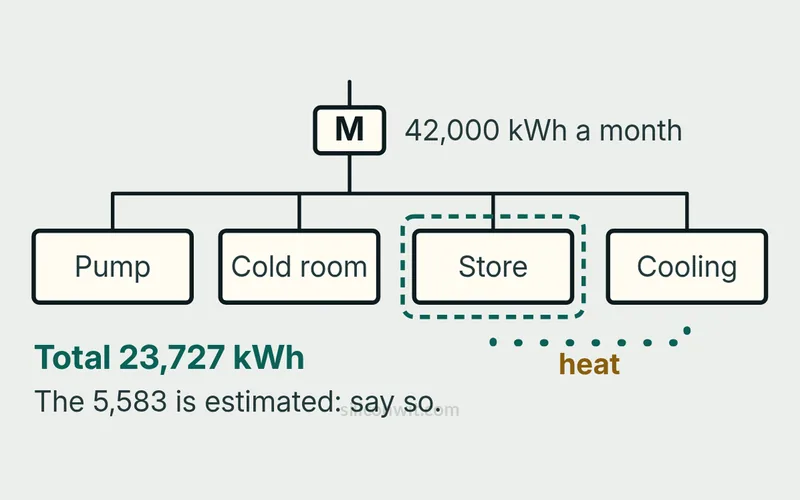 2Draw the boundaryEach flow that crosses it is measured, or estimated and said so.
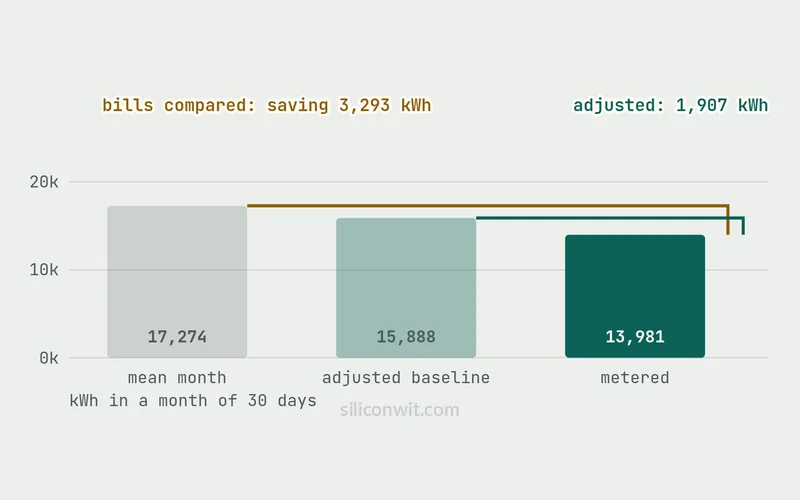 3Take the weather outCompare with what the site would have used this month, not with last year's bill.
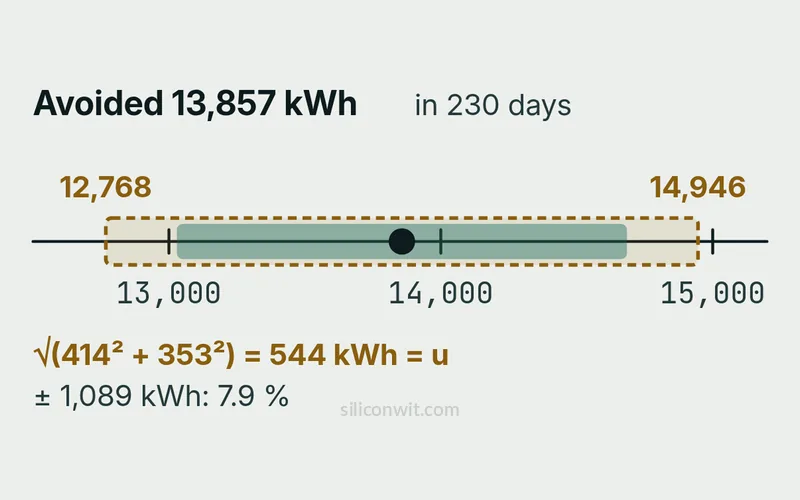 4State the range13,857 kWh avoided, and how far the true figure could be.
New to this? New to energy projects? Start with lesson 1: simple payback, and what it does not see.
You need A computer with Python, numpy, scipy and matplotlib. The data of all four projects are in the lessons.
What a project is worth before you spend, and how to prove what it saved after, so that nobody can argue with it.
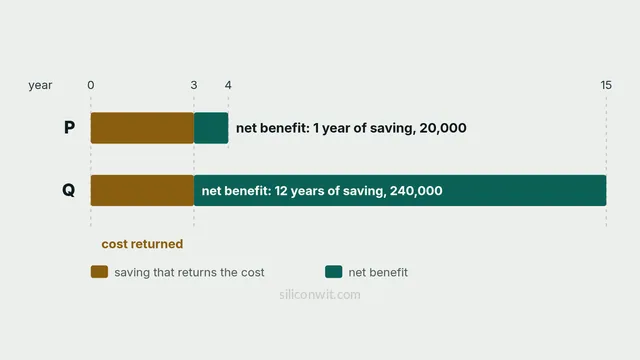 Lesson 1 · 21 minSimple Payback and Its LimitsCost divided by yearly saving: a quick first screen, and why two equal paybacks can earn 20,000 or 240,000.Simple paybackProject lifeContinuing costs
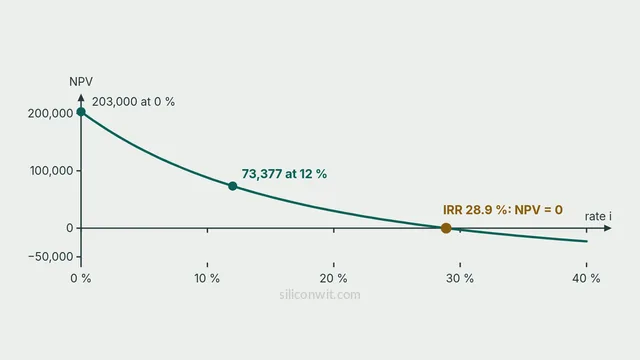 Lesson 2 · 23 minThe Time Value of Money: NPV and IRRGive money a date: NPV, IRR and discounted payback for a pump drive and a capacitor bank.Present valueNPVIRRDiscounted payback
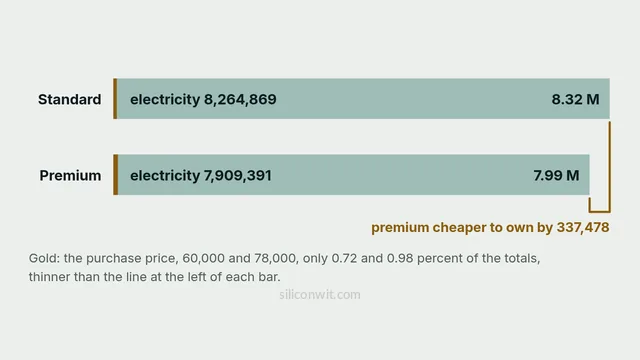 Lesson 3 · 25 minLife-Cycle CostA motor 18,000 cheaper to buy costs 52,000 more in electricity every year. Put both in one number.Life-cycle costAnnual costBreak-even hours
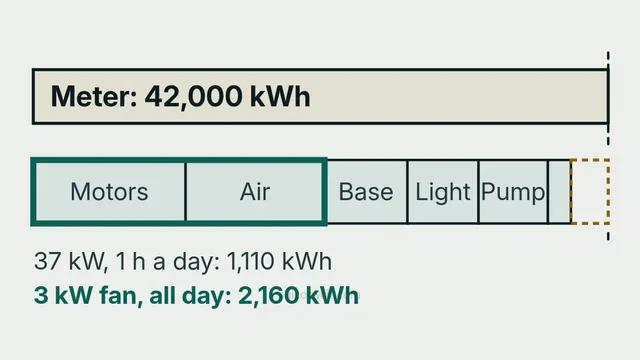 Lesson 4 · 25 minEnergy Audits and What to MeasureDivide a bill of 42,000 kWh among the loads that caused it, and label each figure measured, logged or estimated.Energy balanceLoad factorLogging periodAudit levels
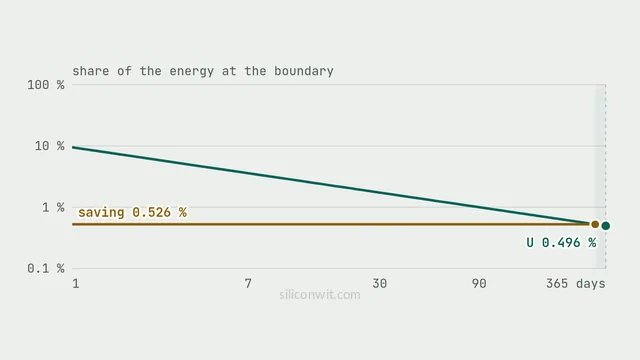 Lesson 5 · 23 minThe Measurement Boundary and the Four OptionsDraw the line round what a claim covers, and choose a method that can see the saving.BoundaryInteractive effectsIPMVP optionsMeter choice
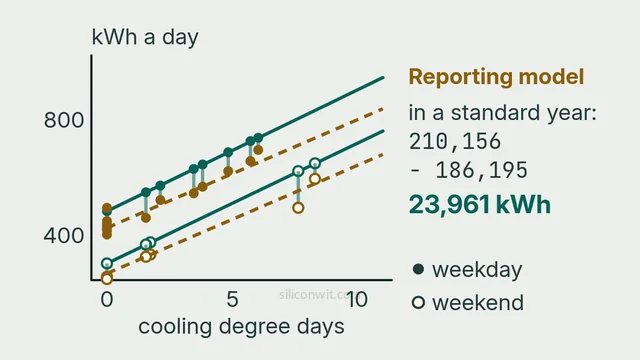 Lesson 6 · 24 minBaselines and Routine AdjustmentsA model of what the site would have used, adjusted to the weather it really met.RegressionDegree daysAvoided energyNormalised savings
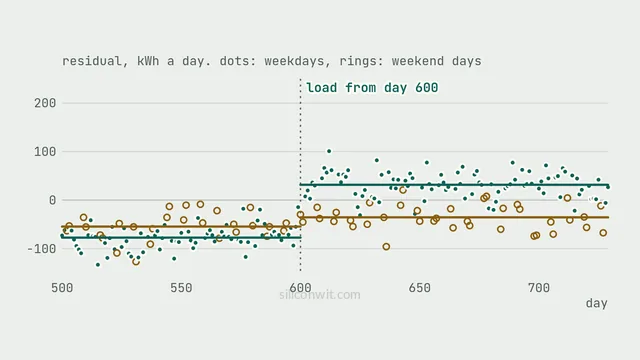 Lesson 7 · 23 minNon-Routine AdjustmentsA new 9 kW load cut a saving from 11.46 to 4.61 percent. Find the change and correct it in a way both sides accept.Static factorsResidualsSub-meteringAdjustments
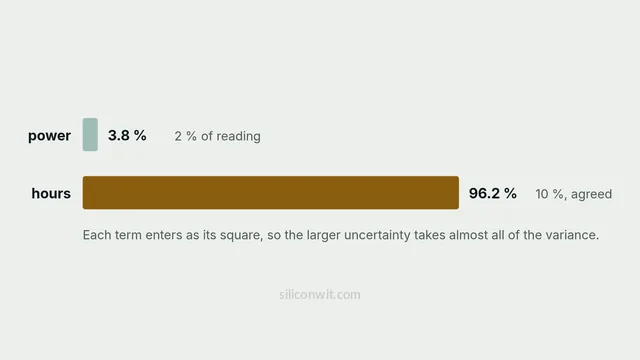 Lesson 8 · 23 minHow Sure Is the Saving?Put a range on a saving, find the term that decides it, and know when the range is too wide to report.Standard uncertaintyRMSEExpanded rangeVariance share
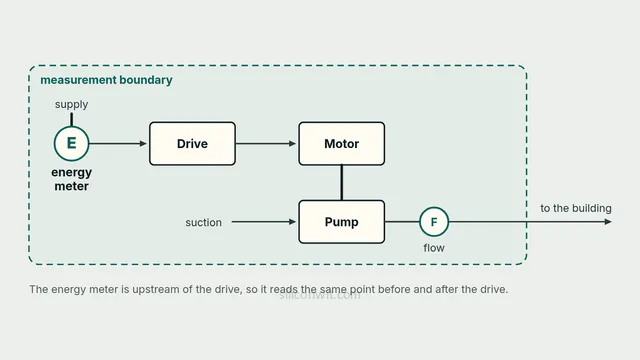 Lesson 9 · 24 minWriting a Measurement and Verification PlanThe document agreed before the work, so the result cannot be argued afterwards.Plan itemsMetersPrecisionM&V cost
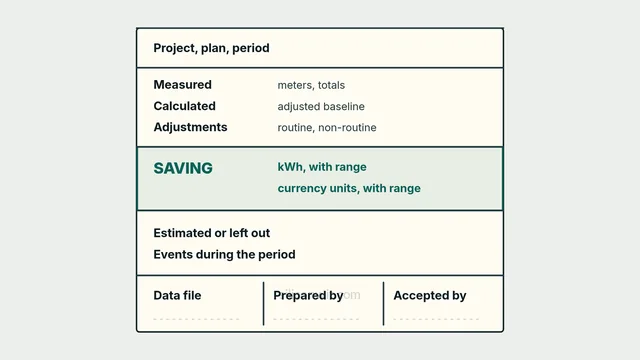 Lesson 10 · 25 minReporting Verified SavingsA one-page report: what was measured, what was estimated, and the saving with its range.Measured and estimatedAdjustmentsRangeEvents
A saving is the difference between what was used and what would have been used. Only the first can be measured, so each number says how far the estimate can be trusted.
The test: who wins the argument?
The test: can an auditor follow every number?
Honest limits. The course explains the method; it is not the text of any protocol. A report is only as good as the record under it. Where owner and contractor see the same record all year, the final report holds nothing new to either.
A supplier promises that a new drive will cut the pumping bill by thirty percent. A year later the bill is higher, the supplier says the weather was hot, and nobody can prove anything. The argument was lost before the project began, on the day nobody wrote down how the saving would be measured. This course is about deciding what a project is worth, and then proving what it delivered. #EnergySavings #MeasurementAndVerification #Payback
It follows four real kinds of project through every lesson: a variable speed drive on a pump, a power factor correction bank, a cold room door curtain and condenser cleaning, and a lighting change. Each lesson works real numbers by hand and checks them in Python.
A computer with Python, and three libraries.
pip install numpy scipy matplotlibLesson 1: Simple Payback and Its Limits
The quickest test of a project, and the three ways it misleads.
Lesson 2: The Time Value of Money: NPV and IRR
Compare a cost today with savings spread over years.
Lesson 3: Life-Cycle Cost
Why the cheapest pump to buy is often the dearest to own.
Lesson 4: Energy Audits and What to Measure
From a walk-through to an investment-grade audit, and the measurements each needs.
Lesson 5: The Measurement Boundary and the Four Options
Decide what is inside the claim before a single reading is taken.
Lesson 6: Baselines and Routine Adjustments
Say what the site would have used, in the conditions it really met.
Lesson 7: Non-Routine Adjustments
What to do when the site itself changes during the project.
Lesson 8: How Sure Is the Saving?
Put a range on a saving, and know when the range swallows it.
Lesson 9: Writing a Measurement and Verification Plan
The document that is agreed before the project, so the result cannot be argued afterwards.
Lesson 10: Reporting Verified Savings
A savings report that a finance manager and an auditor can both accept.
This course explains the method. It is not the text of any protocol or standard, and it does not prepare you for anyone’s certificate. Where a contract names a protocol, the current edition of that protocol decides.
Engineers and researchers who build what they teach.
SiliconWit makes these courses. We also run siliconwit.io, a monitoring service.