Lesson 1: Heat, Work and the First Law on a Cold Room
Count every flow of energy into a cold room, and see what the compressor must remove.
Know how many hours a cold room should run, and find what the extra hours are made of. Ten lessons on one cold room and its machine.
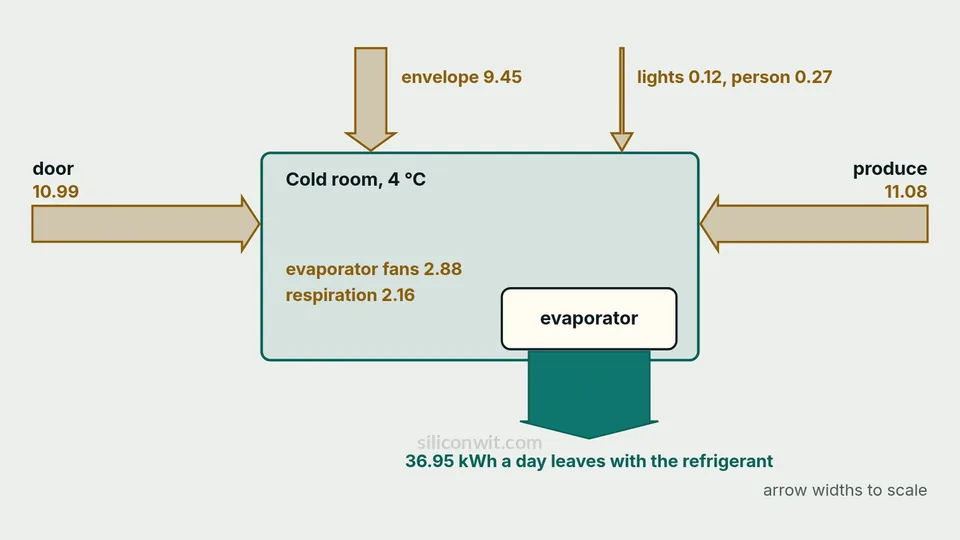
A cold room runs its compressor twenty hours a day instead of fourteen, and still holds its temperature, so nobody looks. A suction gauge reads 1.5 bar and two people disagree by 2 K, because the site is 1,600 m above the sea. A wet panel looks like a dry one and passes about two thirds more heat. The condenser coil turns grey with dust, and the bill rises by a sixth with no visible cause.
In this course you follow one cold room and its refrigeration system. You count the heat that enters it, turn two pressures and two pipe temperatures into the four states of the cycle, and put every load on one page. Then a month of records shows what the extra hours are made of, and what each one costs a year.
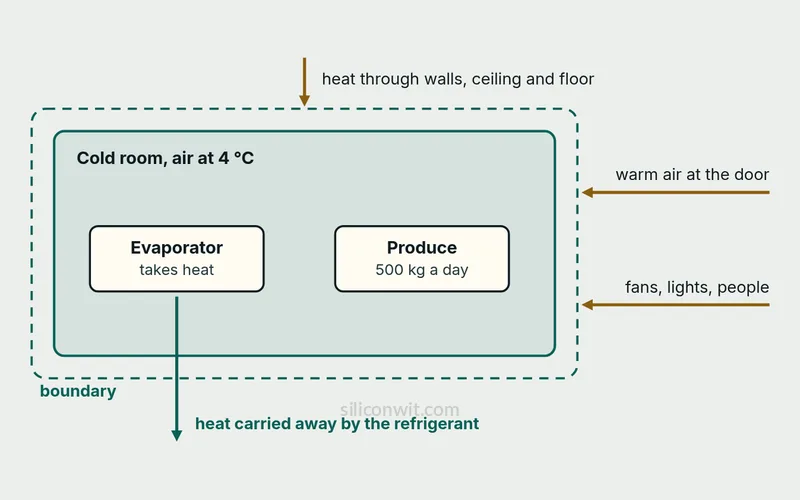 1Count the heat inDraw a line round the room. Walls, door, produce and fans all cross it.
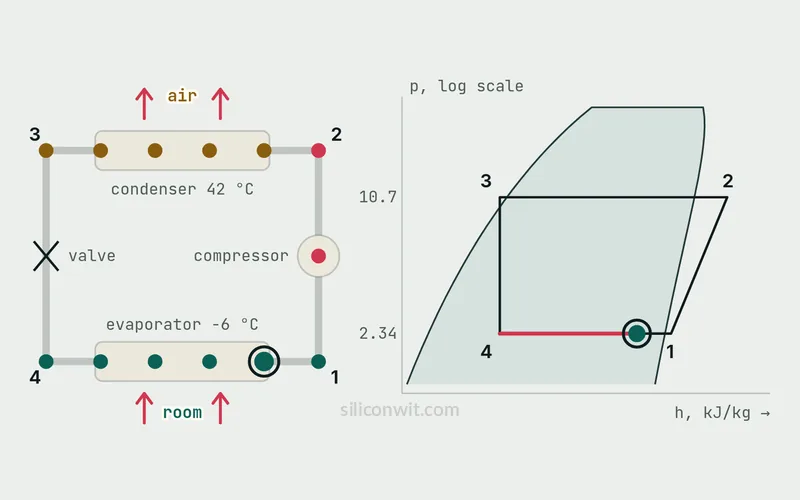 2Read the cycleTwo pressures and two pipe temperatures give every state of the refrigerant.
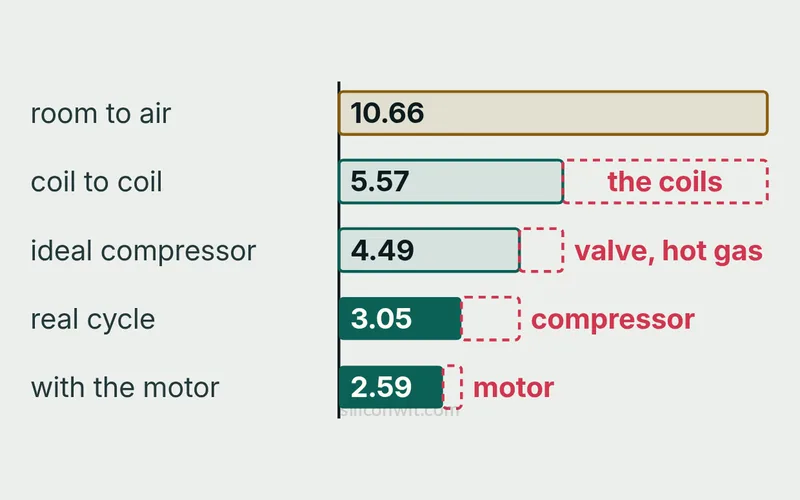 3Price the liftFrom the limit of 5.57 to 2.59 at the meter, each loss named.
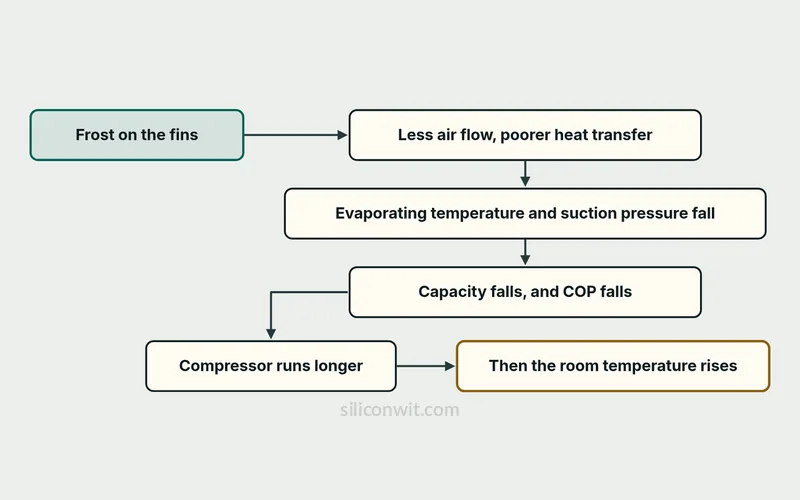 4Read the recordFrost shows as a lower suction pressure, longer runs, then a warmer room.
New to this? New to refrigeration? Start with lesson 1: count the energy that crosses a cold room.
You need A computer with Python, numpy, scipy, matplotlib and CoolProp. The data of the cold room are in the lessons.
Why a cold room or a fridge draws the power it does, what its temperature should be, and what to fix when it is wrong.
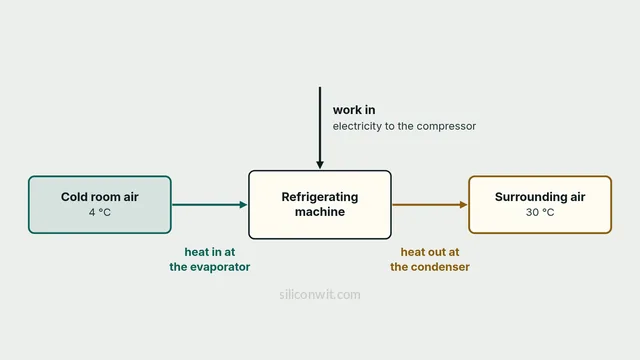 Lesson 1 · 24 minHeat, Work and the First Law on a Cold RoomDraw a line round a cold room and its machine, and count the energy that crosses it.Energy and powerFirst lawSensible and latent heatHeat rejected
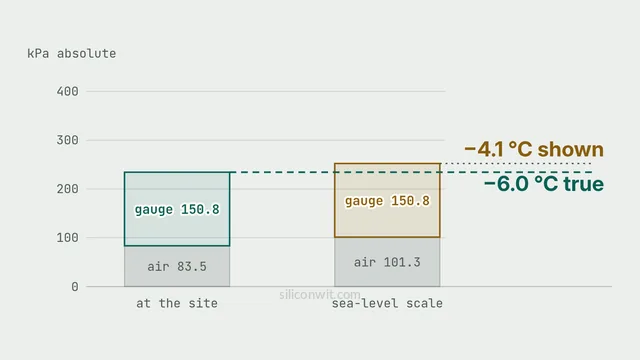 Lesson 2 · 26 minRefrigerants and the Pressure-Enthalpy DiagramTurn a gauge reading into a boiling temperature at any altitude, and place every state on one diagram.SaturationGauge and absolutep-h diagramQuality
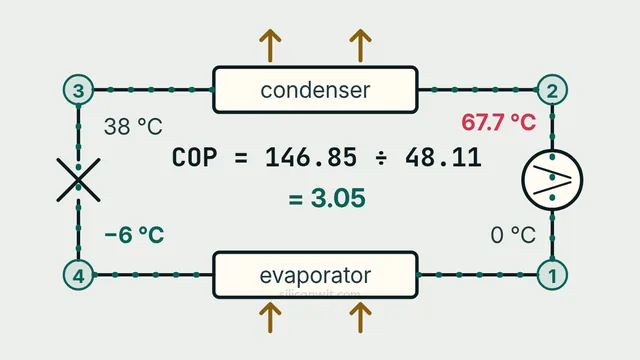 Lesson 3 · 26 minThe Vapour-Compression CycleThe four states of a real cycle: 1.16 kW of electricity for 3.0 kW of cooling.Four processesRefrigerating effectCOPDischarge temperature
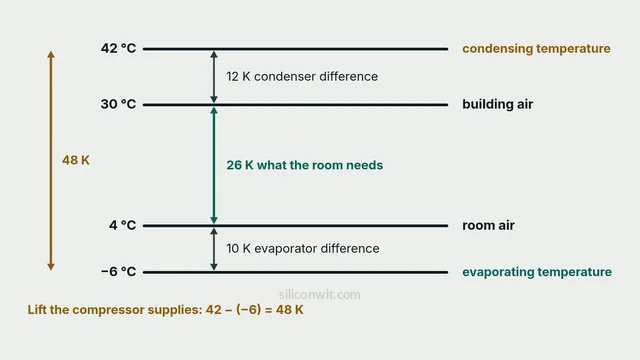 Lesson 4 · 25 minCOP and What Lowers ItWhat each kelvin of lift costs, and a hot day or a colder setpoint turned into hours, kWh and money.Carnot limitTemperature liftCapacityRunning cost
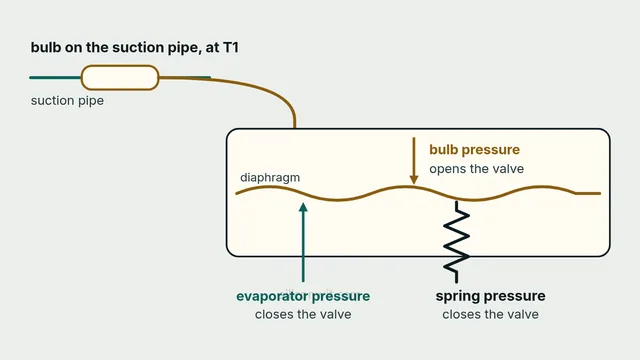 Lesson 5 · 25 minSuperheat, Subcooling and the Expansion ValveSuperheat and subcooling from two pressures and two pipe temperatures, and the patterns a record shows.SuperheatSubcoolingExpansion valvesReading patterns
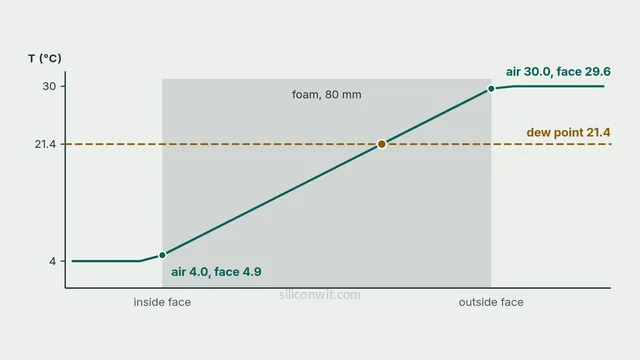 Lesson 6 · 26 minConduction, Insulation and the EnvelopeThe heat that enters through walls, ceiling and floor, and what water in the insulation adds.U-valueTransmission loadWet insulationDew point
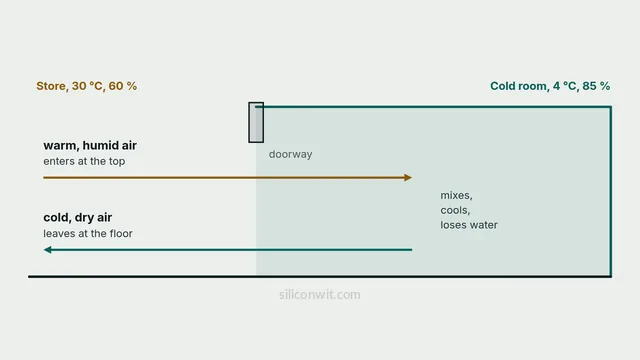 Lesson 7 · 26 minDoor Openings, Infiltration and Product LoadThe heat and the water that forty door openings bring in, most of it hidden in the vapour.Moist airInfiltrationStrip curtainsProduct load
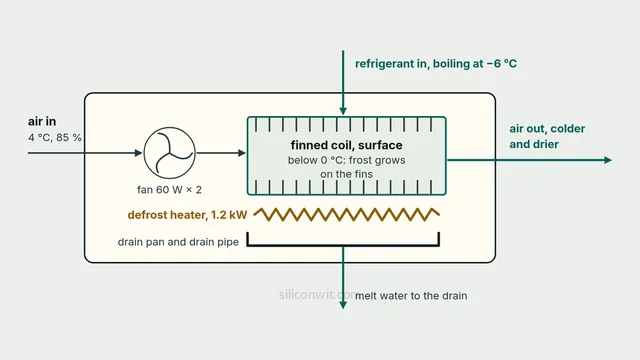 Lesson 8 · 26 minEvaporators, Frost and DefrostThe frost a coil collects, what a defrost really costs, and why fan heat is paid for twice.FrostDefrostFan loadCoil difference
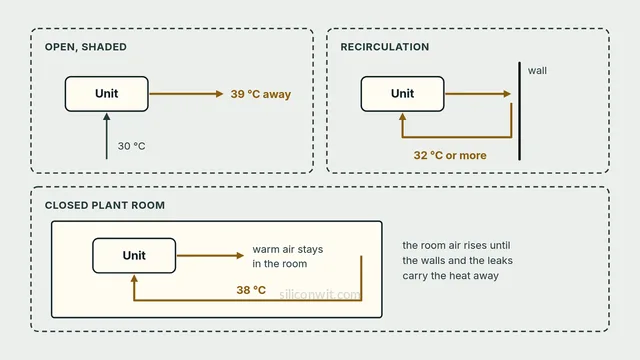 Lesson 9 · 26 minCondensers, Ambient Temperature and Head PressureHow the air at the condenser sets the head pressure, and the yearly cost of a dirty coil.Condensing temperatureHead pressureDirty coilPlant room
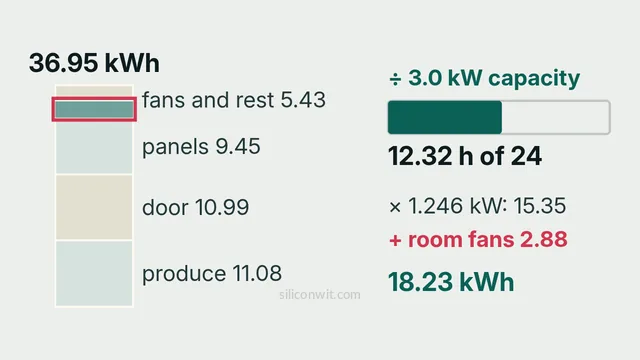 Lesson 10 · 26 minA Cold Room Energy BalanceEvery load on one page, the hours the compressor should run, and what a month of records adds.Load tableRun-time fractionkWh a dayExtra hours
Twenty hours a day is not normal or abnormal until you know what the room needs. Each number comes from the refrigerant, the walls, the door or the air at the condenser.
The test: did the run time rise at the same power?
The test: is the head pressure higher at the same air temperature?
Honest limits. Work on a refrigerant circuit, including charging and recovering refrigerant, is for a qualified refrigeration technician. A reading pattern says what a fault is consistent with; the diagnosis and the repair belong to the technician.
A cold room that runs its compressor twenty hours a day instead of fourteen still holds its temperature, so nobody looks. The extra six hours come from somewhere: a door, a frosted coil, a dirty condenser, wet insulation. Each has a size that can be calculated and a signature that can be measured. #Refrigeration #ColdChain #Thermodynamics
The course follows one cold room and its refrigeration system through every lesson. Each lesson works real numbers by hand and checks them in Python.
A computer with Python, and four libraries. CoolProp gives the properties of the refrigerant and of moist air, so no number in this course is read from a printed table.
pip install numpy scipy matplotlib CoolPropLesson 1: Heat, Work and the First Law on a Cold Room
Count every flow of energy into a cold room, and see what the compressor must remove.
Lesson 2: Refrigerants and the Pressure-Enthalpy Diagram
Read the one diagram on which every refrigeration system is drawn.
Lesson 3: The Vapour-Compression Cycle
Four processes, four components, and the numbers that connect them.
Lesson 4: COP and What Lowers It
Why each degree of temperature lift costs energy, and how much.
Lesson 5: Superheat, Subcooling and the Expansion Valve
Two small temperature differences that tell you if a system is healthy.
Lesson 6: Conduction, Insulation and the Envelope
The heat that comes through the walls, and what wet insulation does.
Lesson 7: Door Openings, Infiltration and Product Load
Why the door is often the largest load in the room.
Lesson 8: Evaporators, Frost and Defrost
What frost does to capacity, and what a defrost costs.
Lesson 9: Condensers, Ambient Temperature and Head Pressure
Why a dirty condenser raises the bill, and by how much.
Lesson 10: A Cold Room Energy Balance
Put the whole room on one page: loads, capacity, run time and energy per day.
Work on a refrigerant circuit, including charging and recovering refrigerant, is for a qualified refrigeration technician. The lessons explain how the system behaves and how to read its measurements.
Engineers and researchers who build what they teach.
SiliconWit makes these courses. We also run siliconwit.io, a monitoring service.