Lesson 1: What a Reading Is Worth: Accuracy, Precision and Resolution
Three words that are not the same thing, and what a maker’s figure really promises.
Know what a reading is worth: how far it can be from the truth, and which part of the chain decides it. Ten lessons on six instruments found on almost every site.
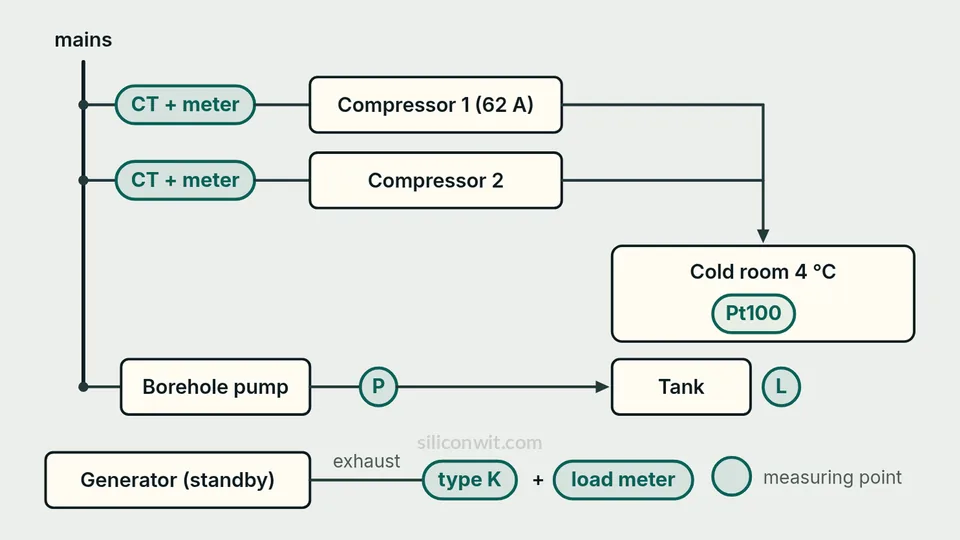
A cold room controller shows 4 °C all night, and in the morning the produce is frozen: 30 metres of cable added 2 Ω where 0.39 Ω means one degree. A generator exhaust reads 417 °C while the engine is at 450 and overloaded. A screen shows 0.0 bar, and nobody can say if the pump stopped or a wire broke 400 m away.
In this course you put a defensible plus or minus on a reading, find the part of the chain that decides it, and check the wiring, the loop and the calibration. The last lesson writes a measurement plan for one site, in which every instrument has a reason.
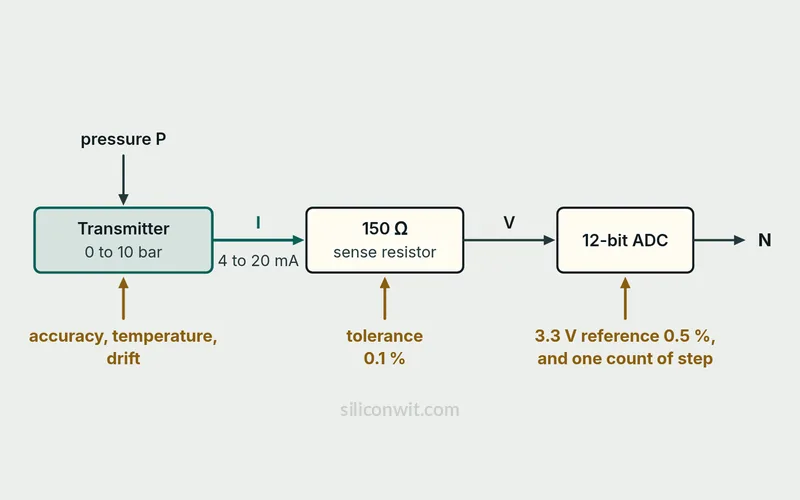 1Follow the whole chainTransmitter, resistor and converter each add their own doubt.
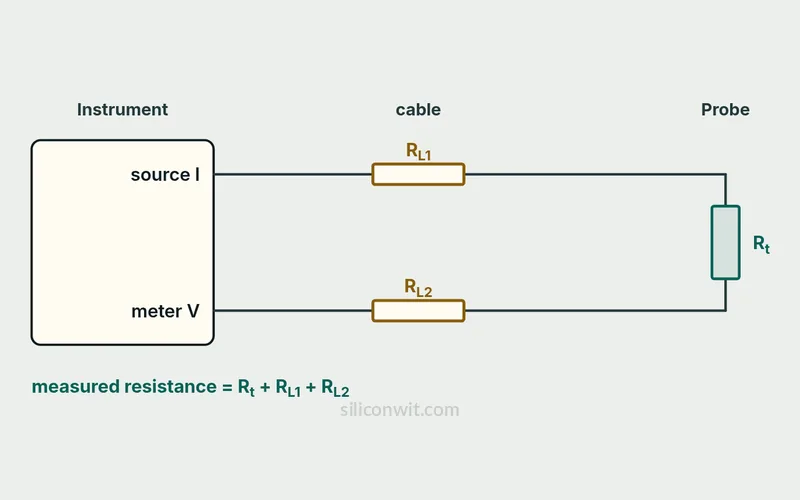 2Check the wiringTwo wires add both leads to the probe. A third or fourth removes them.
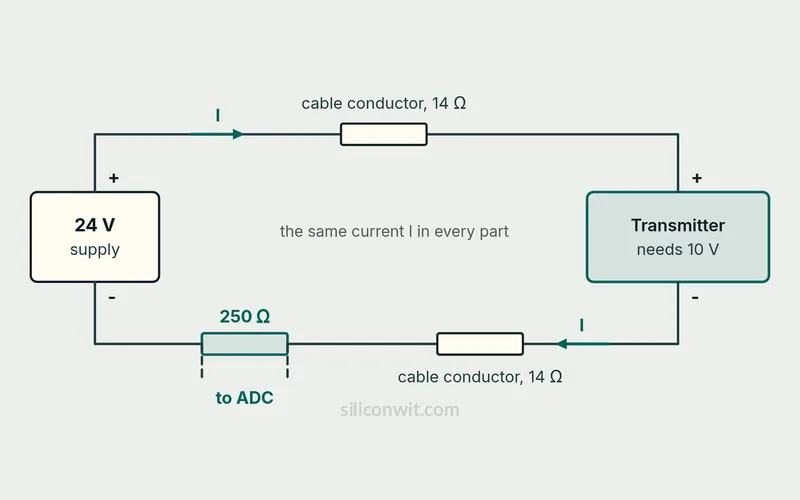 3Check the loopEnough voltage left for the transmitter, at its largest current.
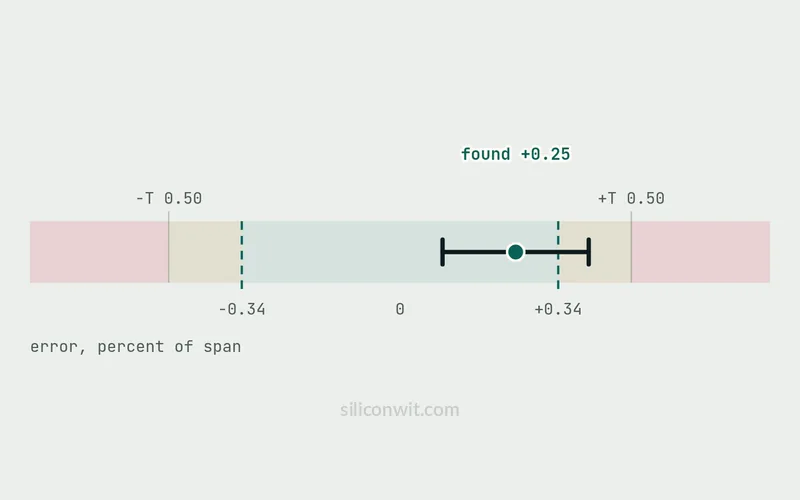 4Calibrate with numbersAs found against a reference, then pass or fail honestly.
New to this? New to instruments? Start with lesson 1: accuracy, precision and resolution, and what a maker's figure promises.
You need A computer with Python, numpy, scipy and matplotlib. The readings of all six instruments are in the lessons.
Every number a sensor gives has an error. Learn how large it is, and how far you can trust the number.
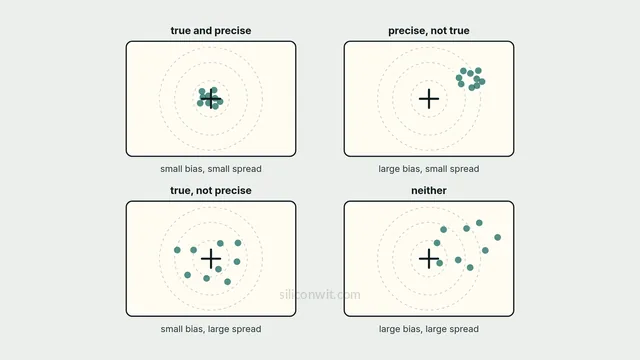 Lesson 1 · 25 minWhat a Reading Is Worth: Accuracy, Precision and ResolutionThree words that are not the same thing, and which part of an error ten readings let you remove.BiasRepeatabilityResolutionPercent of span
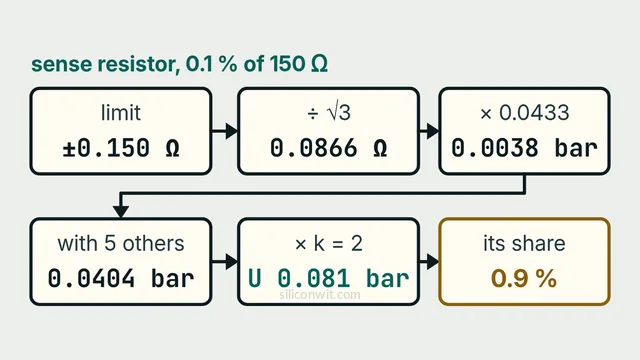 Lesson 2 · 28 minUncertainty BudgetsA defensible plus or minus for a pressure reading, and why money spent on the smallest term is wasted.Type A and BSensitivityRoot sum of squaresExpanded uncertainty
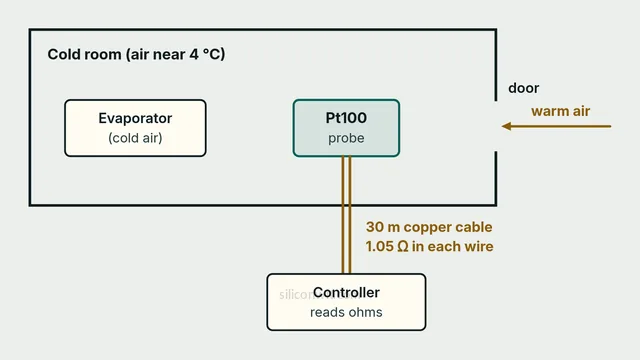 Lesson 3 · 28 minResistance Thermometers: Pt100 and Pt1000From ohms to degrees, and the 5.38 °C that two wires of 30 m add to a cold room reading.Pt100IEC 60751Three and four wiresSelf-heating
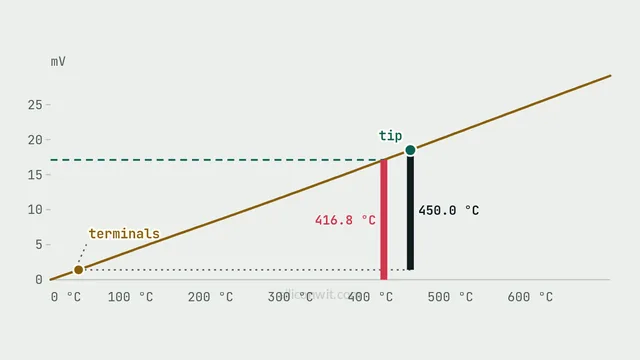 Lesson 4 · 26 minThermocouples and the Cold JunctionWhere the voltage really comes from, and the missing compensation that makes 450 °C read 417.Seebeck effectType KCold junctionExtension cable
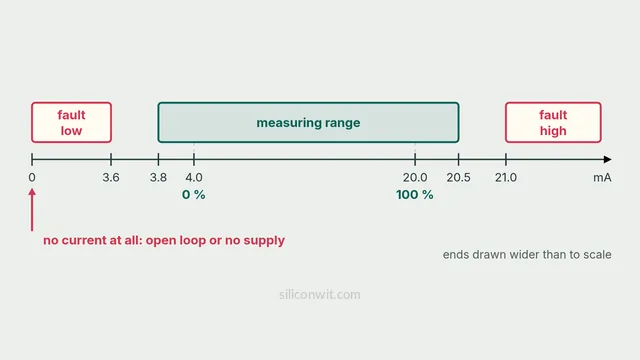 Lesson 5 · 27 minThe 4 to 20 mA Current LoopWhy industry sends a current, how to tell a broken wire from a stopped pump, and the loop voltage budget.Live zeroNAMUR NE 43Voltage budgetScaling
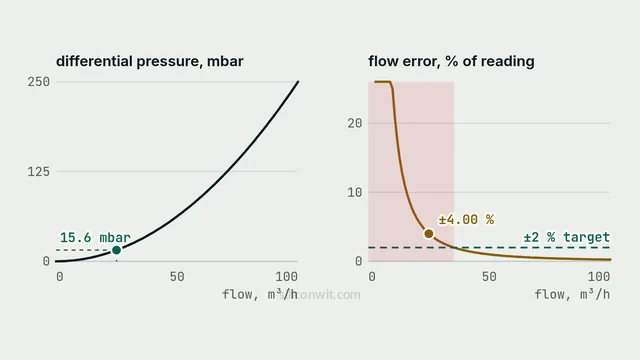 Lesson 6 · 26 minPressure, Level and FlowLevel and flow from a pressure, and what each conversion costs in error.Gauge and absoluteHydrostatic levelOrifice flowTurndown
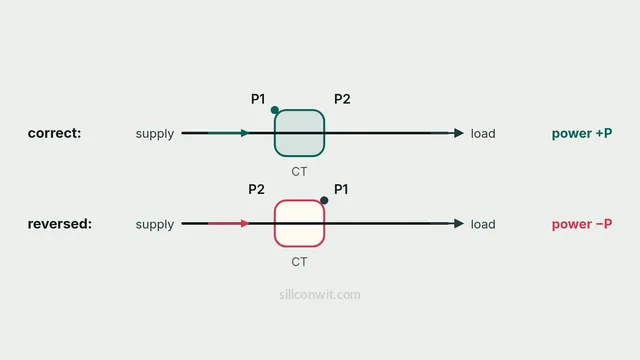 Lesson 7 · 29 minCurrent Transformers and Energy MeteringRatio, class and burden, the error of a kilowatt-hour, and the reversed transformer that counts backwards.CT ratioAccuracy classBurdenPhase pairing
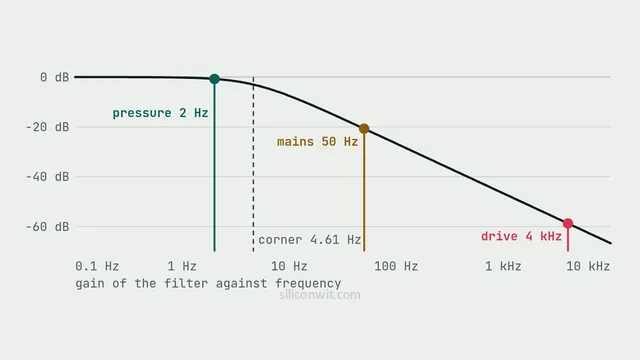 Lesson 8 · 29 minSignal Conditioning, Noise and SamplingKeep a small signal clean beside a drive, and choose a filter, a sample rate and an average from numbers.ShieldingRC filterAliasingAveraging
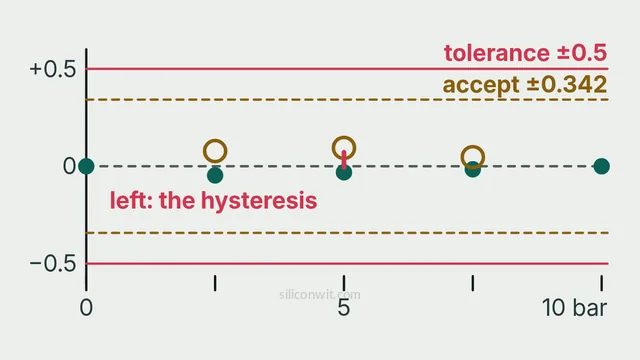 Lesson 9 · 26 minCalibration, Drift and TraceabilityA five-point calibration, an honest pass or fail, and the next date set from evidence.As foundHysteresisAcceptance limitDrift
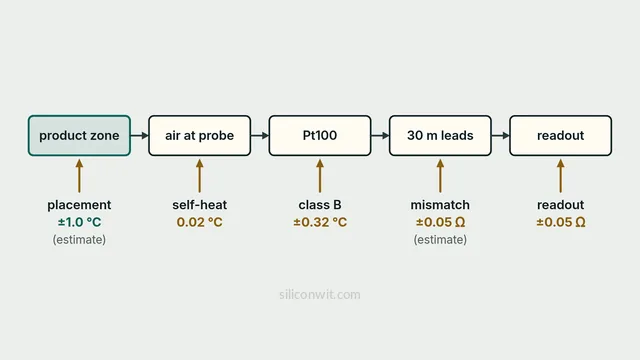 Lesson 10 · 29 minA Measurement Plan for a SiteFrom the owner's questions to a one-page plan for a cold store, with a defended ± on the two figures quoted most.Required uncertaintyPlacementPlanWhat is not measured
A result is not 4.00 bar. It is 4.00 bar with a range, and each number in the chain says where that range comes from.
The test: how small a change can it show?
The test: how far from the truth can it be?
Honest limits. The lessons explain what instruments do and how good their readings are; they are not installation instructions, and work on the mains is for a licensed electrician. Protection stays in its own controller on site. The continuous record, the alert when a threshold or a gap appears, and the comparison between sites need a system beyond the instrument.
Two meters on the same pipe disagree, and nobody can say which is right. A cold room record says 4 °C, and an auditor asks how sure you are. Most arguments about a measurement are really arguments about its uncertainty, and most people have never been shown how to work one out. This course is about what a reading is worth. #Instrumentation #Measurement #Calibration
It follows six instruments found on almost every site: a pressure transmitter on a pump line, a Pt100 in a cold room, a thermocouple on a generator exhaust, a current transformer on a compressor feeder, a level transmitter in a tank and an energy meter. Each lesson works real numbers by hand and checks them in Python.
A computer with Python, and three libraries.
pip install numpy scipy matplotlibLesson 1: What a Reading Is Worth: Accuracy, Precision and Resolution
Three words that are not the same thing, and what a maker’s figure really promises.
Lesson 2: Uncertainty Budgets
Put a defensible plus or minus on any measurement, and find the term that dominates.
Lesson 3: Resistance Thermometers: Pt100 and Pt1000
From ohms to degrees, and what two, three and four wires each cost.
Lesson 4: Thermocouples and the Cold Junction
Where the voltage really comes from, and the compensation most often done wrong.
Lesson 5: The 4 to 20 mA Current Loop
Why industry sends a current, and how to check a loop has enough voltage.
Lesson 6: Pressure, Level and Flow
Three measurements from one principle, and where each goes wrong.
Lesson 7: Current Transformers and Energy Metering
Ratio, class and burden, and the error of a kilowatt-hour.
Lesson 8: Signal Conditioning, Noise and Sampling
Keep a small signal clean beside a large drive, and sample it fast enough.
Lesson 9: Calibration, Drift and Traceability
Read a certificate, run a five-point check, and set the interval from evidence.
Lesson 10: A Measurement Plan for a Site
Decide what to measure, where, how well and how often, for one real site.
Fitting sensors to mains equipment is work for a licensed electrician. The lessons explain what the instruments do and how good their readings are. They are not installation instructions.
Engineers and researchers who build what they teach.
SiliconWit makes these courses. We also run siliconwit.io, a monitoring service.